
The Complete Dolomites Field Guide: Wildlife, Rocks, and 5,300 Years of People
Photos and field notes researched by Aaron Herst.
VITAL is returning to the Dolomites - one of the most beautiful and rigorous alpine trekking experiences anywhere. The terrain shifts by the mile, the history runs deep, and the sheer beauty stops you in your tracks around every bend.
We're guests here, and that matters to us. We love learning about - and sharing - what we find on the trail, from the flora to the fauna, and we want to honor the land, its people, and its traditions. That's why we created this VITAL Field Guide, researched by our VITAL field researcher Aaron Herst, to help all of us be better guests as we set out on the Alta Via.
Enjoy!
Libby, Founder and Chief Explorer, VITAL Ventures
Mountains Born from the Sea
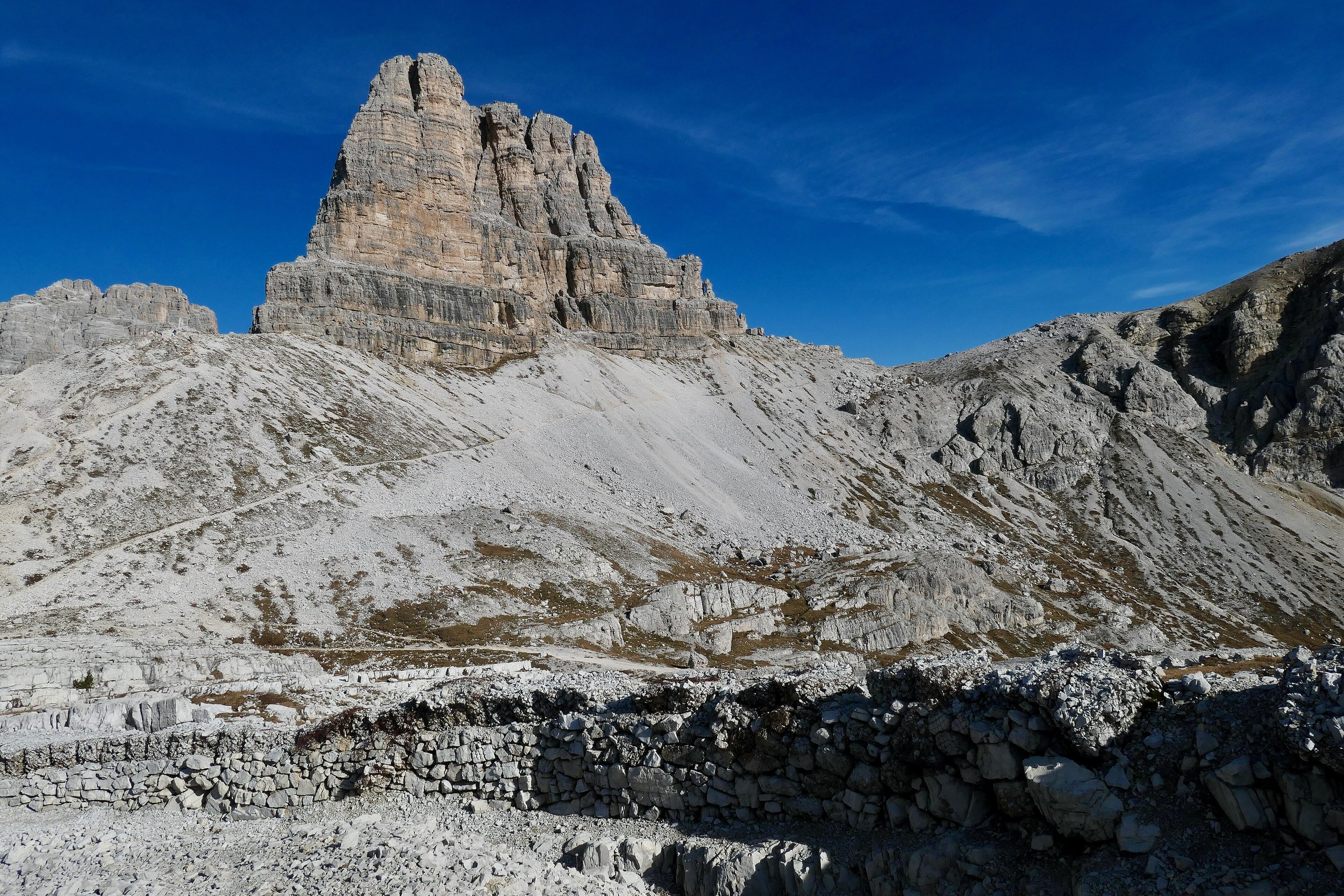
Dolomites - Bruno Rijsman - CC BY-SA 2.0
The Dolomites don't look like other mountains, and once you know why, you'll never see them the same way again. Sharp limestone spires rise straight out of alpine meadows, glowing pink at sunset, holding the bones of an ancient sea and the scars of a world war. This is what to know before you're standing among them with your crew.
Here's the fact that changes how you look at every peak: the Dolomites started forming more than 250 million years ago at the bottom of a warm tropical sea.
The pale rock underfoot is dolomite, a magnesium-rich limestone built from the hardened remains of ancient coral reefs and marine organisms. It's what gives these mountains their distinctive color and their dramatic vertical cliffs.
Ice Age glaciers did the rest, carving valleys and rounding peaks into the rugged terrain you'll train to move through. That geology creates real range in habitat: dense spruce and larch forest, colorful alpine meadow, bare rock at elevation, and each zone supports its own community of wildlife. It's also why the Dolomites carry UNESCO World Heritage status: this is one of the clearest places on Earth to see geology, ecosystem, and ongoing natural forces connect.
One more thing to watch for: the light. As the sun moves across the peaks, the pale rock shifts from soft gray to brilliant pink, orange, and red, known locally as enrosadira. It's not a postcard exaggeration. Sunrise and sunset here are worth planning around.
Wildlife has adapted to that same varied geology. Alpine Ibex, Chamois, Alpine Marmots, and Golden Eagles all make their home somewhere in this stack of habitats, from dense forest floor to bare rock at elevation. More on each of them below.
A Landscape of Stories
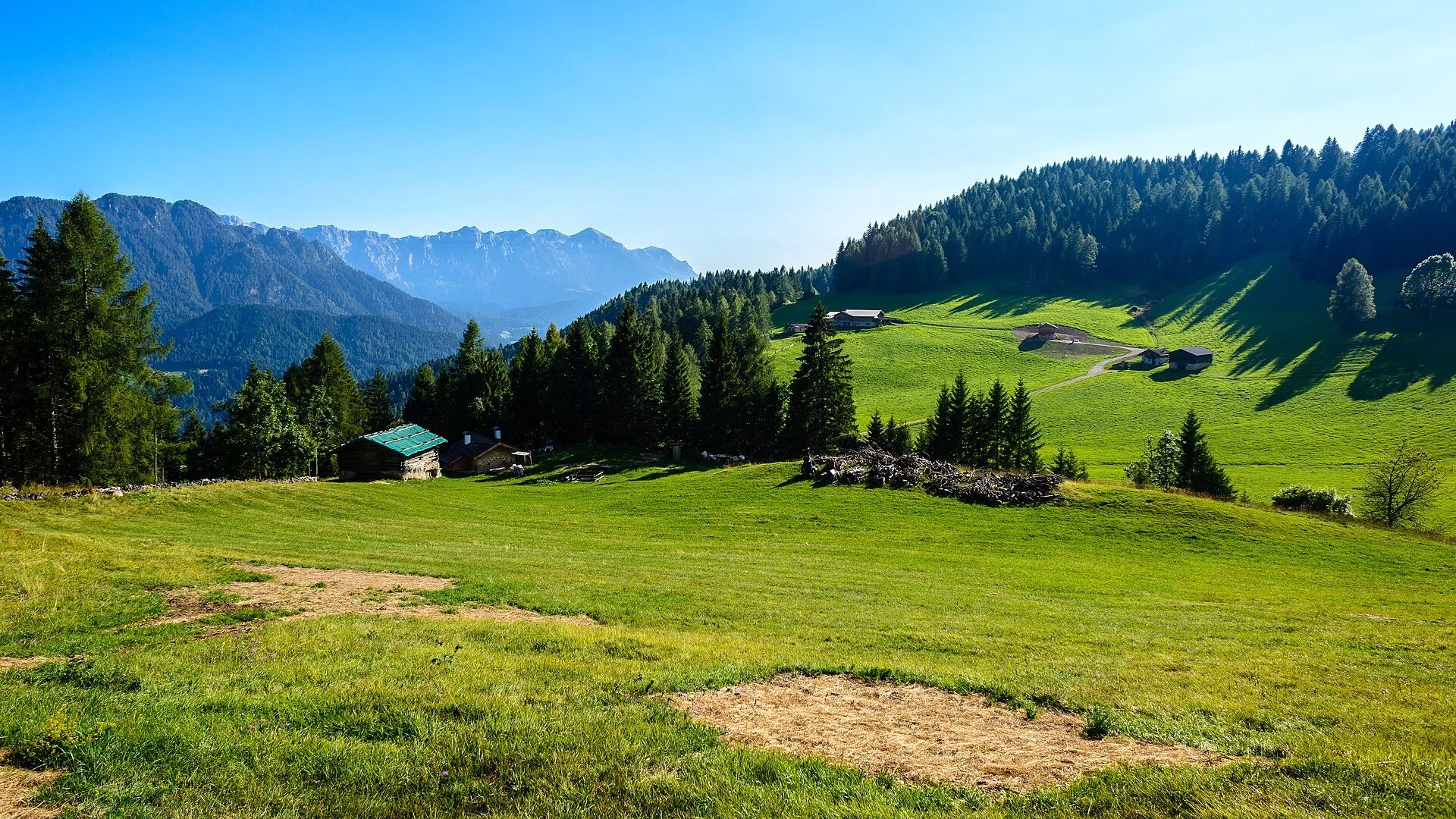
Dolomites - Nick Savchenko - CC BY-SA 2.0
People have lived among these mountains since prehistoric times, with settlements dating to the Bronze Age. The most famous evidence comes from just over the border: Ötzi the Iceman, a remarkably preserved 5,300-year-old traveler whose discovery reshaped what we know about life in prehistoric Europe.
For centuries, communities here built their lives around livestock grazing, forestry, and small-scale farming. The Dolomites sit at a genuine cultural crossroads, where Italian, Germanic, and Ladin traditions meet in the language, architecture, food, and customs still alive in mountain villages today.
The more recent history is harder won. During the First World War, these peaks became one of the highest battlefields ever fought, as Italian and Austro-Hungarian forces held positions across brutal alpine terrain, with tunnels, trenches, and fortifications carved directly into the mountains themselves. Many of these remnants are still there to walk through today, serving as quiet reminders of the human stories hidden among the peaks, a reminder of what these mountains have already survived.
The Terrain You'll Train For

Tre Cime di Lavaredo - Ximonic (Simo Räsänen) - CC BY-SA 4.0
The Dolomites are known for sharp, castle-like peaks rather than rounded summits. Dramatic vertical cliffs, towering spires, broad plateaus, and deep valleys dominate the region. Tre Cime di Lavaredo, with its three distinctive towers, and Marmolada, the range's highest peak at 10,968 feet (3,343 m), show the scale you're working with. Between the peaks, a network of valleys, passes, and high mountain plateaus creates some of the most scenic hiking terrain in Europe, with trails winding through quiet forest, across flower-filled meadows, and along dramatic ridgelines. The terrain shapes exactly what our training program builds you toward.
A Symphony of Alpine Color

Edelweiss - Böhringer Friedrich - CC BY-SA 2.5
Every summer, hundreds of wildflower species take advantage of a short growing season to burst into color across the meadows and rocky slopes. The most iconic is Edelweiss (Leontopodium nivale), a small, star-shaped flower covered in fine white hairs that shield it from cold and intense sun, long celebrated as a symbol of the Alps.
Some flowers move fast. Alpine Snowbell (Soldanella alpina) blooms while snow patches still linger, and Trumpet Gentian (Gentiana acaulis) brightens grassy slopes with vivid blue flowers soon after. Moss Campion (Silene acaulis) survives the wind by growing low and dense, hugging the ground in tight cushions.
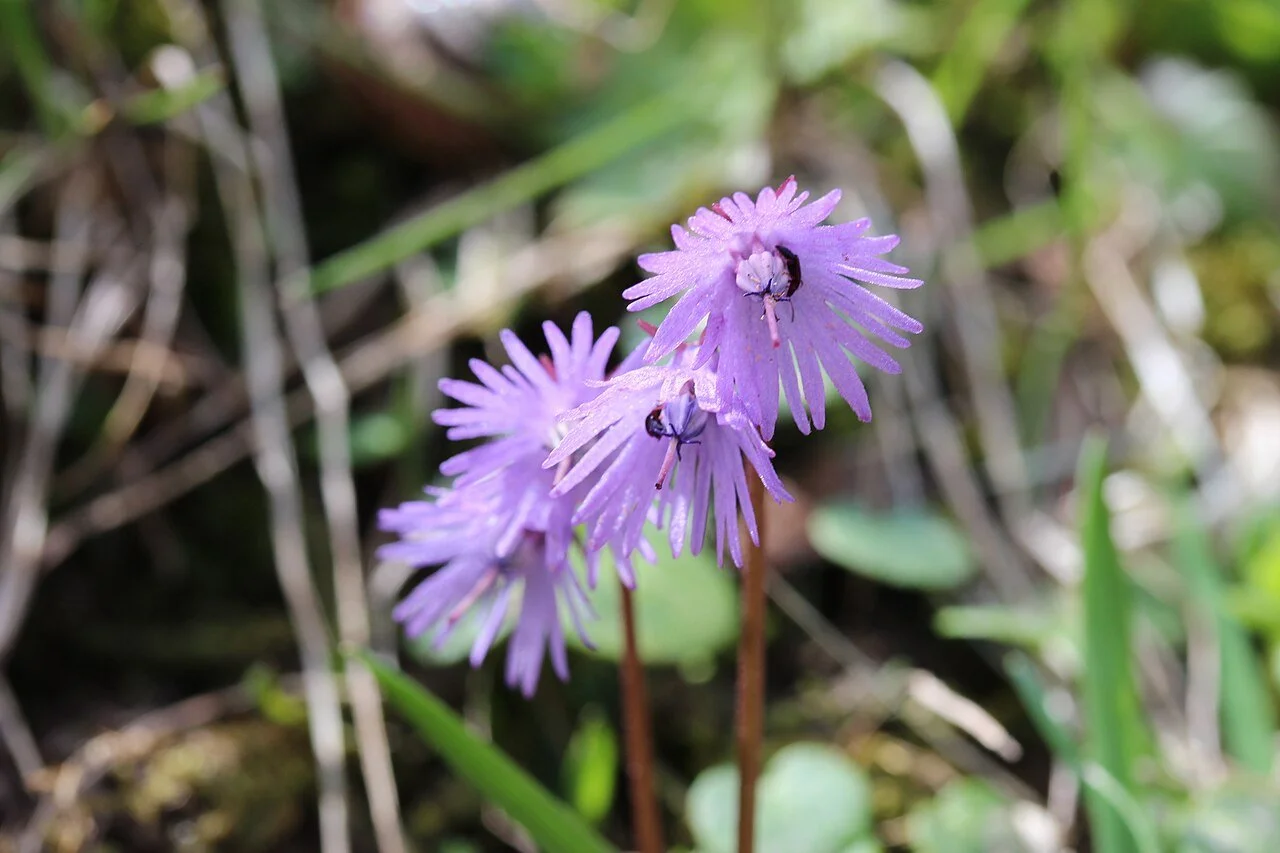
Alpine Snowbell - Björn S. - CC BY-SA 2.0
As summer builds, Alpine Rose (Rhododendron ferrugineum) paints entire mountainsides pink, while Arnica (Arnica montana) and Yellow Wood Violet (Viola biflora) fill out meadows and forest edges. Many of these plants carry long histories of traditional use, but their real value now is ecological: leave them where they grow. Together, they're a case study in adaptation: each bloom timed precisely to the brief window this elevation allows, a story of survival written into the high mountains every summer.
Forests of the High Country
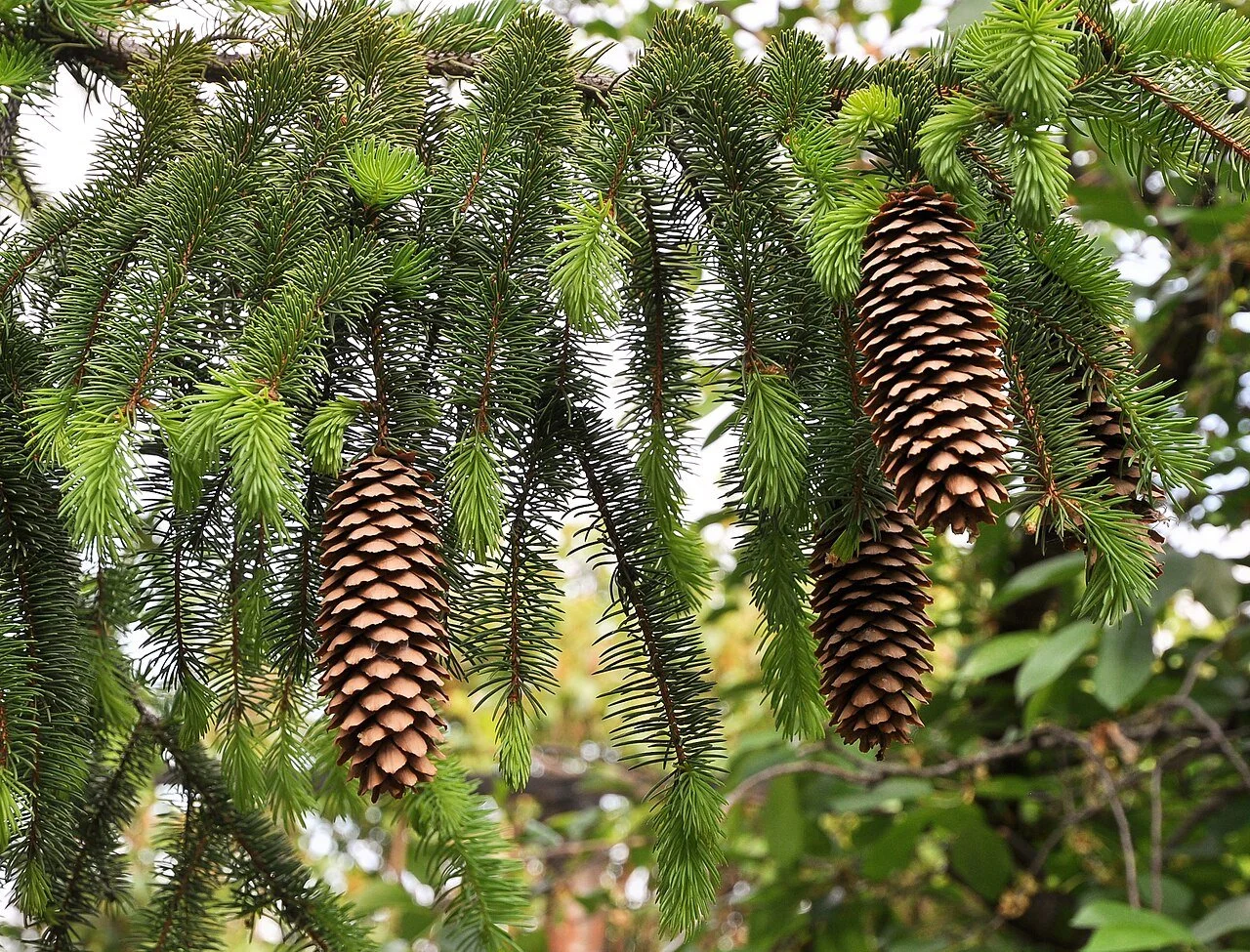
Norway Spruce - MrPanyGoff - CC BY-SA 3.0
Before you reach the open alpine meadow, you'll pass through forest. Each tree here is built for snow, cold, and steep ground. Norway Spruce (Picea abies) is the most widespread, forming dense forest through the lower and middle elevations; its tall, straight trunks have long been prized for timber, including violins and guitars. European Larch (Larix decidua) is one of the few conifers that drops its needles each year, turning entire hillsides gold in autumn, which is one of the most recognizable sights in the range.
Near the treeline, where most trees give up, Mountain Pine (Pinus mugo) thrives. Low, twisted, and tough enough to endure wind, deep snow, and thin soil while helping stabilize the slopes around it. Together, these three species form the backbone of the Dolomites' ecosystem, providing the food, shelter, and nesting sites that the rest of this list depends on, from songbirds hidden in the canopy to the mammals moving through the understory below.
Life on the Wing
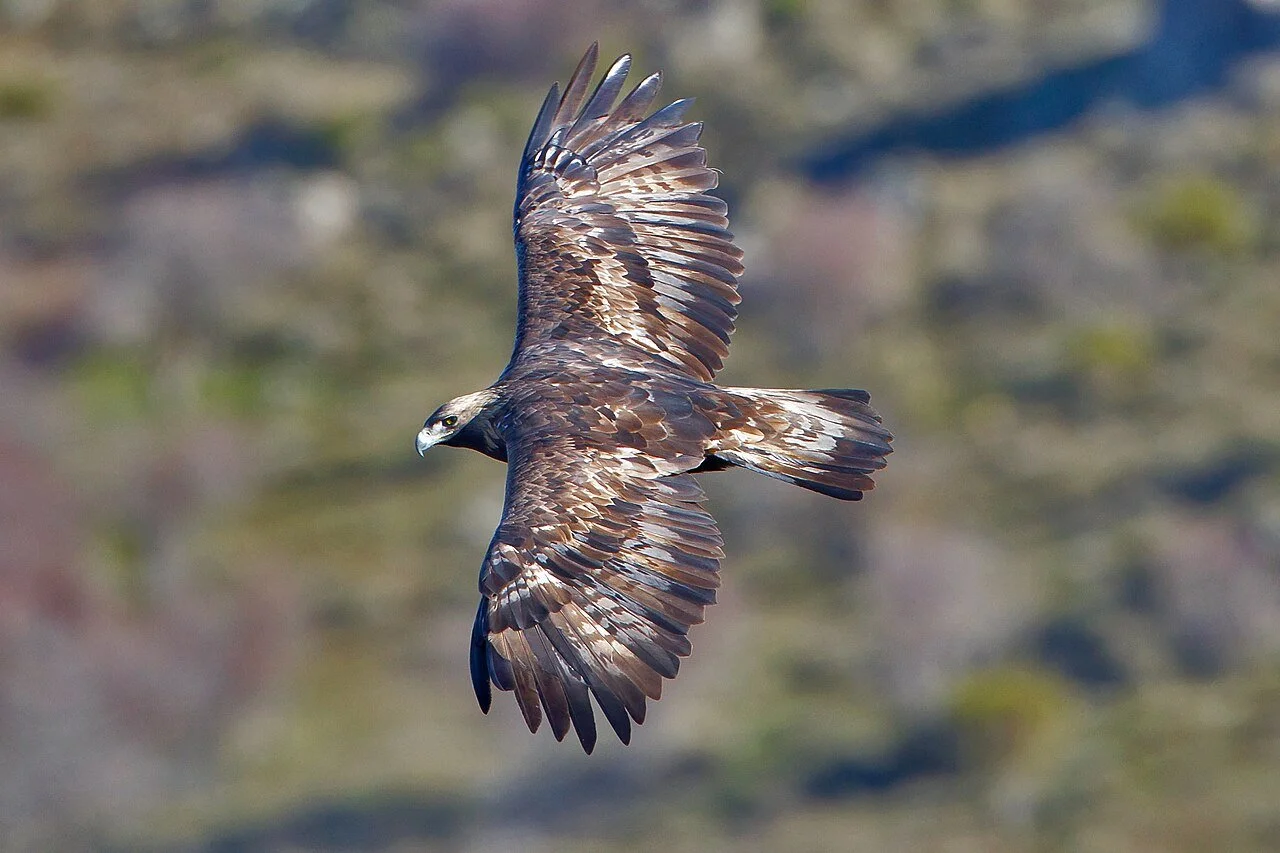
Golden Eagle - Juan Lacruz - CC BY-SA 3.0
The undisputed ruler of the alpine sky is the Golden Eagle (Aquila chrysaetos), patrolling ridges and valleys on broad wings in search of marmots and hares. Watching one ride the updrafts is one of the true wildlife moments of a Dolomites trip. Equally legendary is the Bearded Vulture, or Lammergeier (Gypaetus barbatus), once extinct in the Alps and now successfully reintroduced. Unlike most vultures, it specializes in bones, carrying them high into the air and dropping them onto rocks to break them into edible pieces.
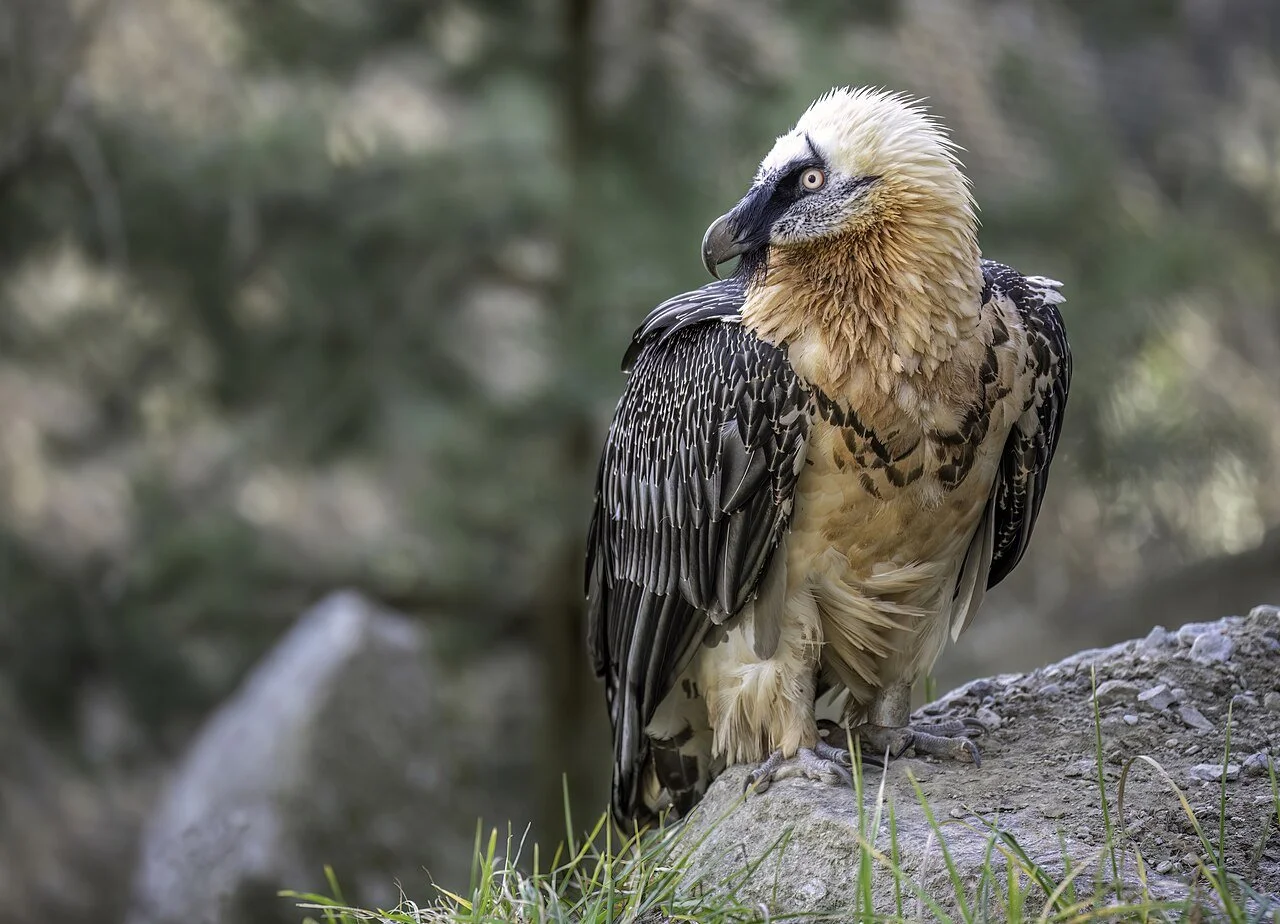
Bearded Vulture - Wilfredor
Lower in the forest and meadow, the Western Capercaillie (Tetrao urogallus) and Black Grouse (Lyrurus tetrix) are famous for dramatic courtship displays, where males compete for attention with elaborate dances and calls. Higher up, the Rock Ptarmigan (Lagopus muta) survives year-round in harsh alpine conditions by swapping brown summer camouflage for snowy white winter plumage. In the forest, listen for the Black Woodpecker (Dryocopus martius), Europe's largest woodpecker, whose powerful bill carves out enormous nesting cavities that later become valuable shelter for many other birds and small animals.
Tiny Dragons of the Alps
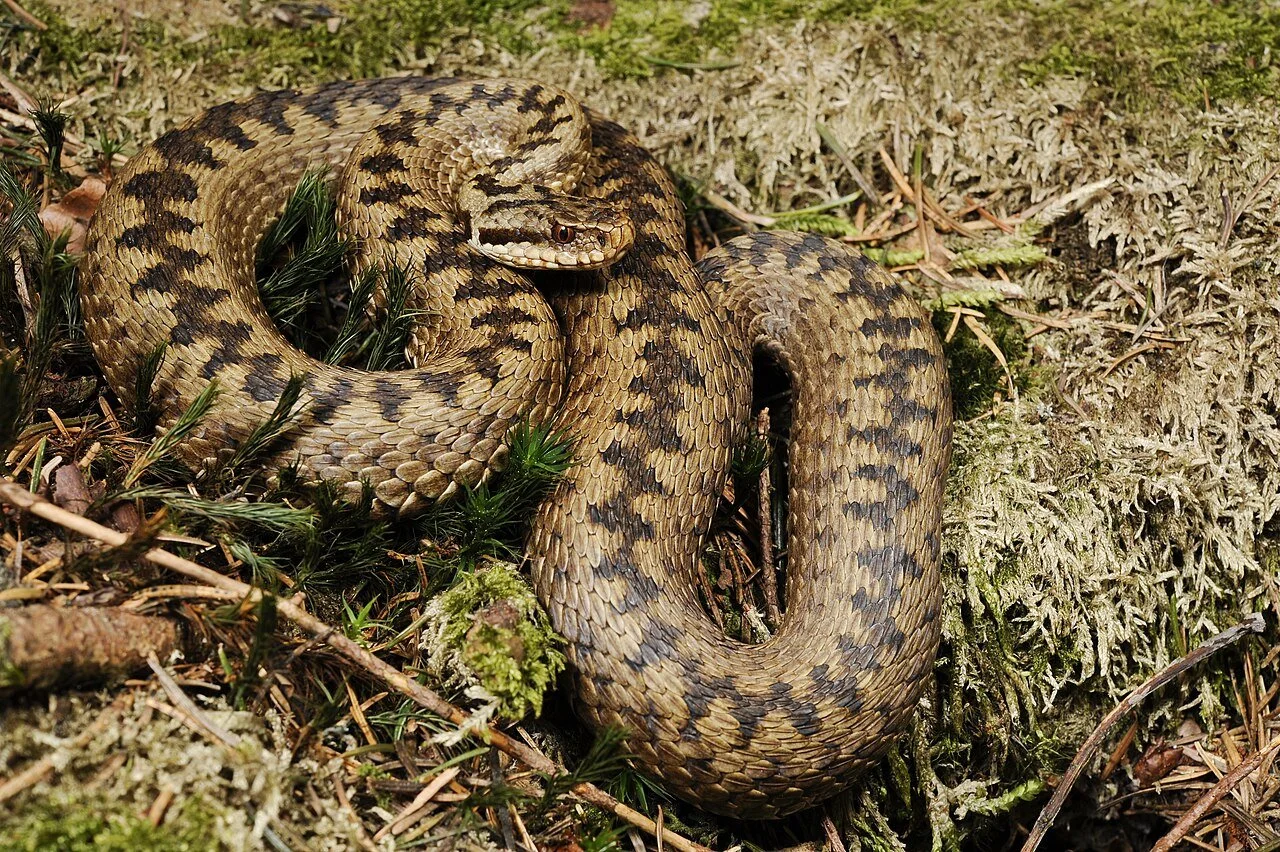
European Adder - Benny Trapp - CC BY 3.0
Reptiles and amphibians have found their own way to thrive here. The European Adder (Vipera berus) and Asp Viper (Vipera aspis) are the range's venomous snakes. They are shy, camouflaged, and generally uninterested in humans, though worth respecting on the trail. In damp forests and after rainfall, look for the Fire Salamander (Salamandra salamandra), one of Europe's most striking amphibians; its bold black body with bright yellow markings almost looks painted, and it depends on clean, moist habitat to hunt insects and other invertebrates. In mountain ponds and wetlands, the Alpine Newt (Ichthyosaura alpestris) spends part of its life underwater, with males flashing vivid blue and orange coloration as they compete for mates during breeding season.
Giants of the Slopes
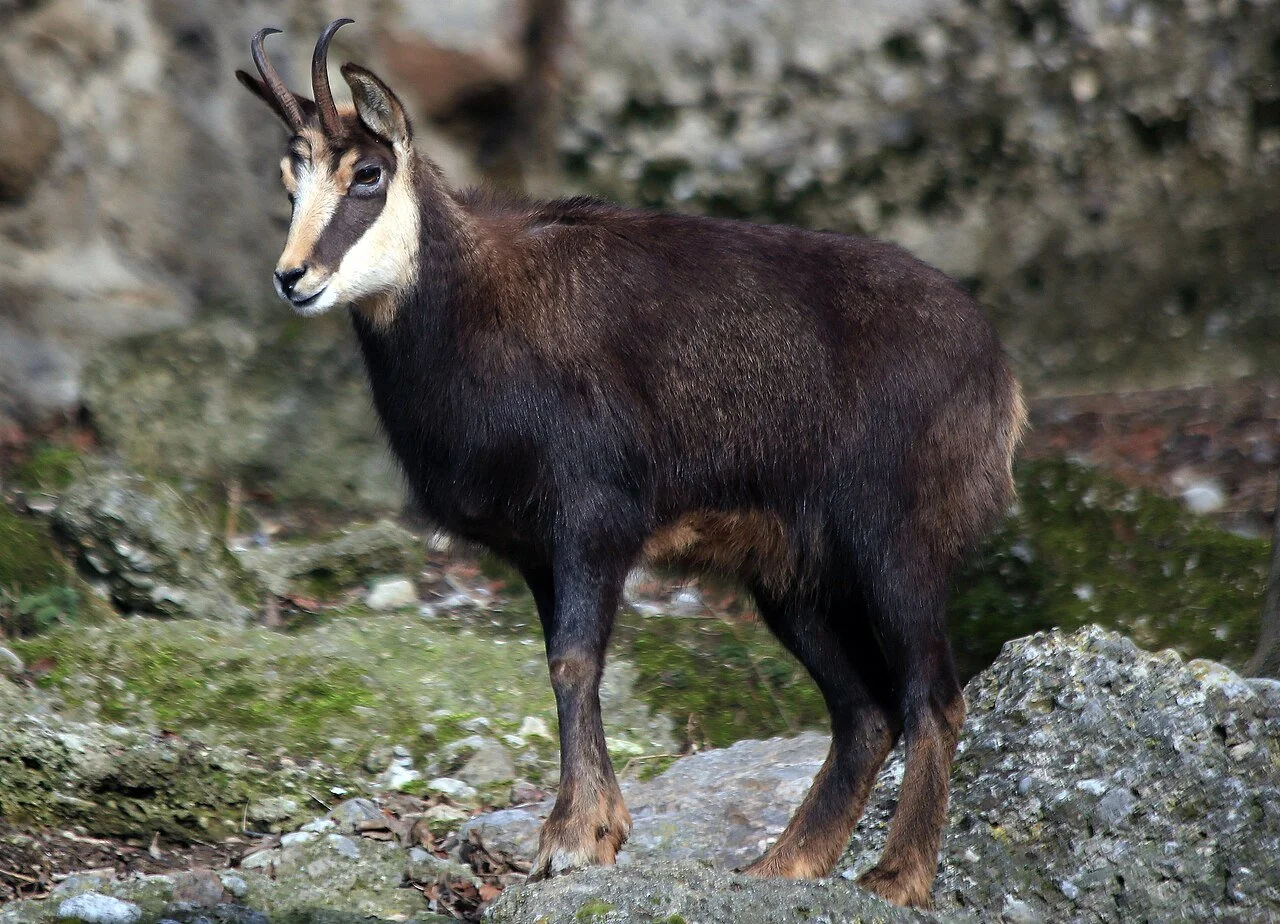
Chamois - Manfred Werner - CC BY-SA 3.0
The Dolomites support a strong community of large herbivores built for steep, snowy terrain. Red Deer (Cervus elaphus) are the largest native deer, most often seen during the quiet hours of dawn and dusk. Males are especially impressive in autumn, when their deep roaring calls echo through the valleys during the breeding season. The smaller Roe Deer (Capreolus capreolus) is widespread through forests and woodland edges, browsing on leaves, buds, and shrubs.
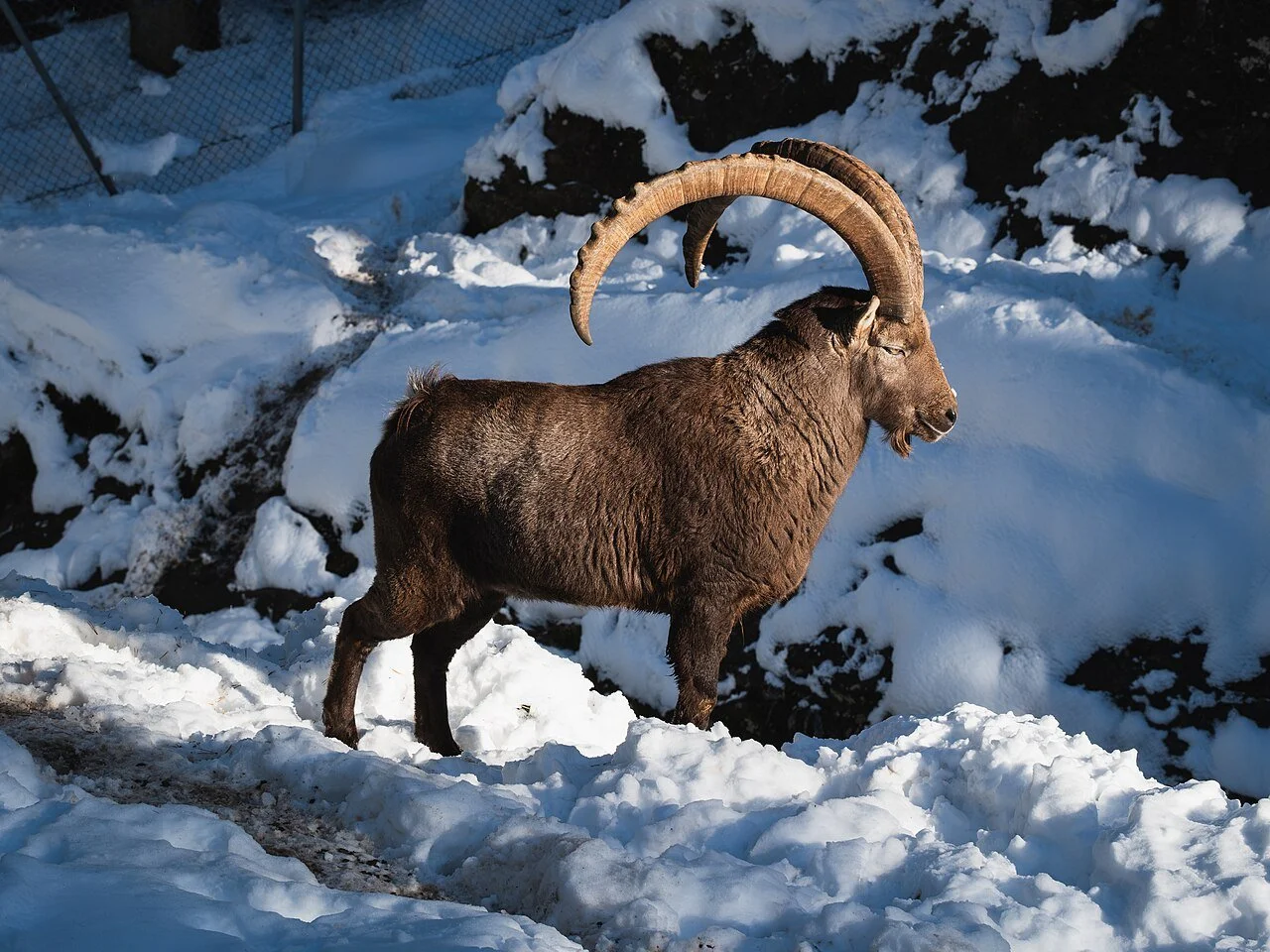
Alpine Ibex - Christian David - CC BY-SA 4.0
The Chamois (Rupicapra rupicapra), a goat-antelope built for steep cliffs and rocky slopes, is arguably the most iconic mountain resident, and with specialized hooves and incredible agility, it moves with total confidence across terrain that looks nearly impossible to navigate. The true symbol of the high Alps is the Alpine Ibex (Capra ibex), famous for its enormous curved horns and extraordinary climbing ability. This mountain goat once nearly disappeared from the Alps due to overhunting, and its recovery across many alpine regions, including the Dolomites, is one of the range's genuine conservation success stories. The Mouflon (Ovis aries musimon) adds a different chapter: unlike the other ungulates here, mouflon were introduced to parts of the Alps by humans, and adult males are easily recognized by their reddish-brown coats and impressively curled horns.
The Mountain's Hidden Hunters
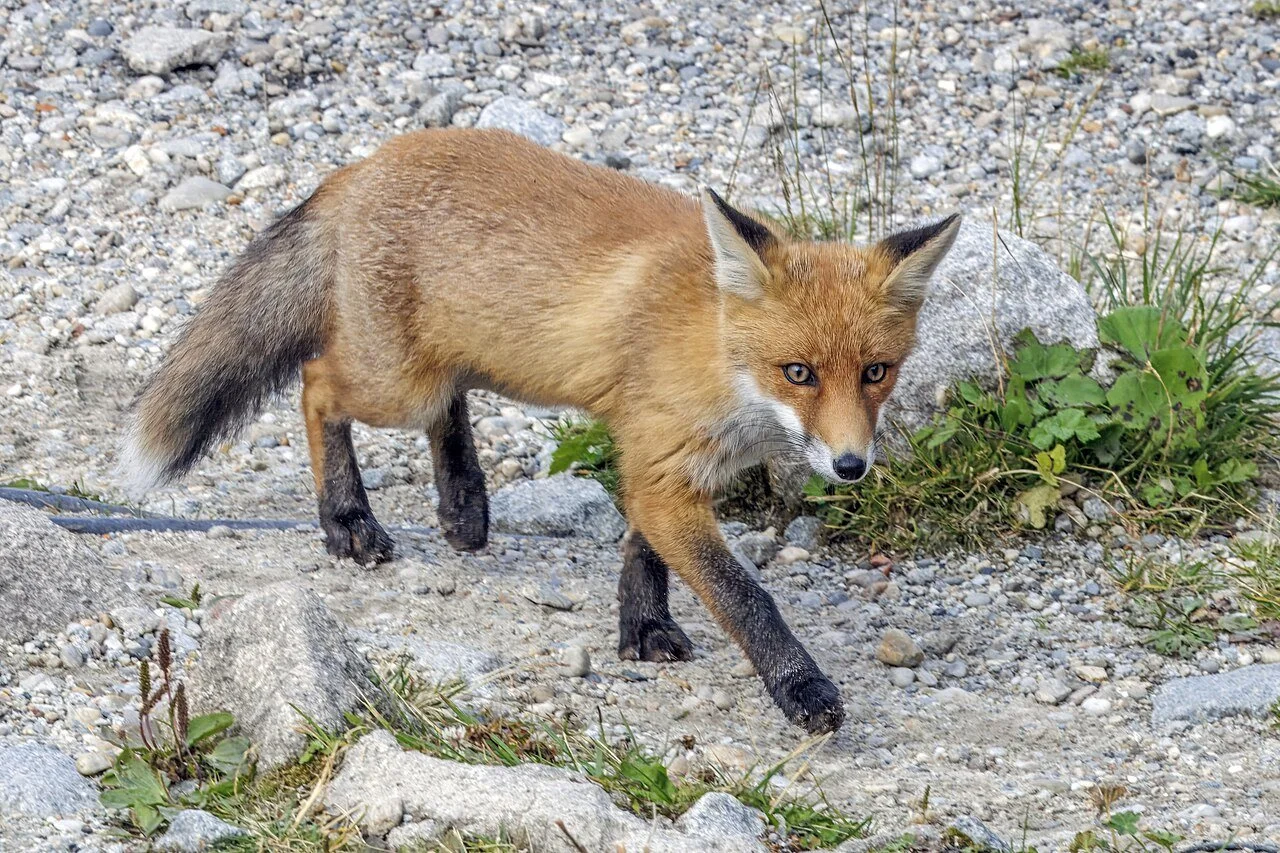
Red Fox - Charles J. Sharp - CC BY-SA 4.0
A quieter predator network moves through the same forests and valleys. The Red Fox (Vulpes vulpes) is the most adaptable, hunting rodents, birds, and insects everywhere from deep forest to the edge of villages. The European Badger (Meles meles) is powerful but secretive, spending much of its life in underground burrow systems called setts and emerging at night to search for insects, small animals, and plant food. High in the forest canopy, the European Pine Marten (Martes martes) moves with surprising agility, hunting birds, rodents, and insects while navigating through trees with ease. The Stoat (Mustela erminea) is the smallest of the group, fast, fearless, and built for pursuing rodents and other small prey through the underbrush. As winter arrives, it swaps its coat for snowy white, using seasonal camouflage to close the distance on prey while staying hidden itself. These hunters are rarely seen, but they play a real role in keeping the mountain food web in balance.
Small Creatures, Big Roles
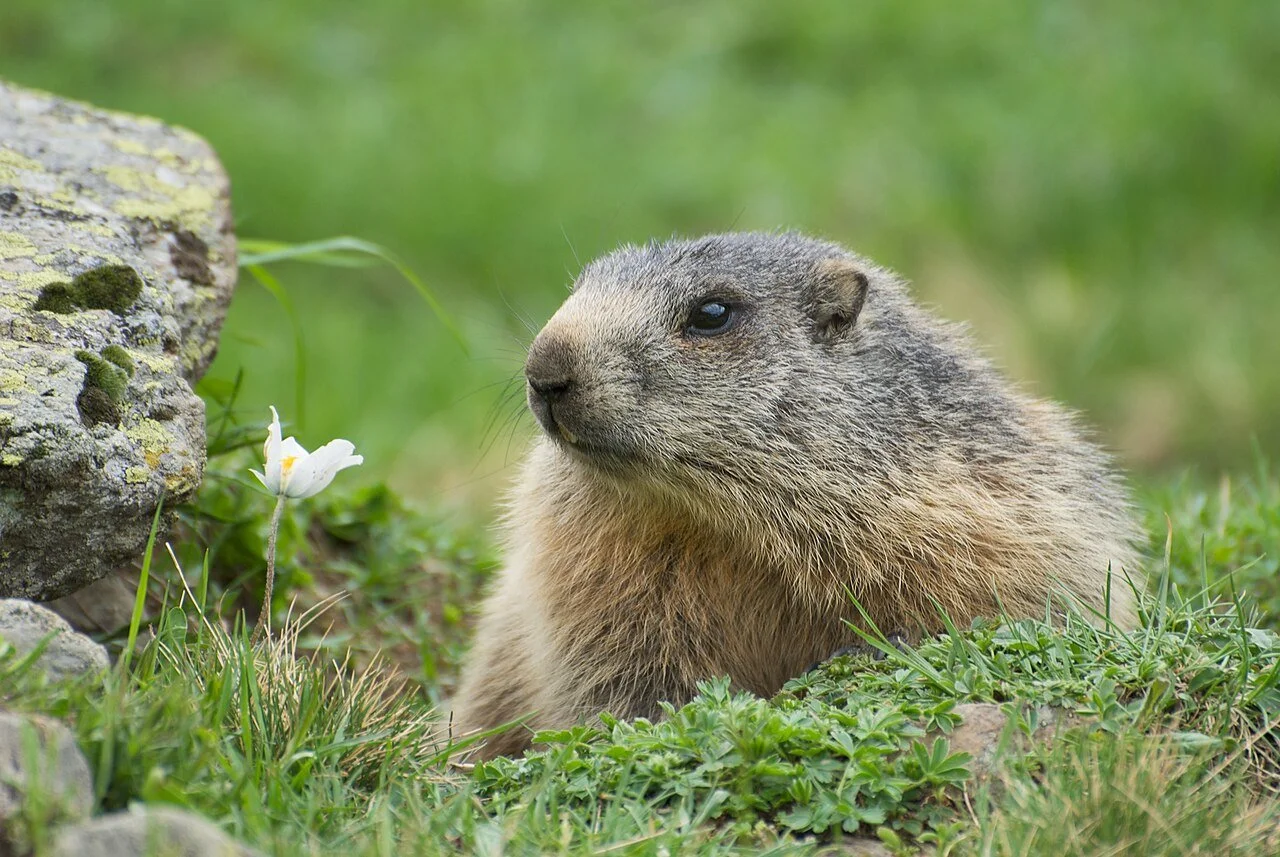
Alpine Marmot - Bernie
Some of the most important residents here are also the smallest. The Alpine Marmot (Marmota marmota) lives in family colonies across rocky meadows, its whistle-like alarm calls echoing at the first sign of danger before the colony disappears underground to hibernate through winter. The Mountain Hare (Lepus timidus) is another master of alpine survival, changing coat color with the seasons to blend into meadows, rock, and snow-covered ground depending on the month. Below the treeline, the Red Squirrel (Sciurus vulgaris) is a familiar, energetic presence through the spruce and larch forest, darting between branches and feeding on seeds, cones, fungi, and berries, one of the easiest mammals to notice on any trail.
Masters of Disguise
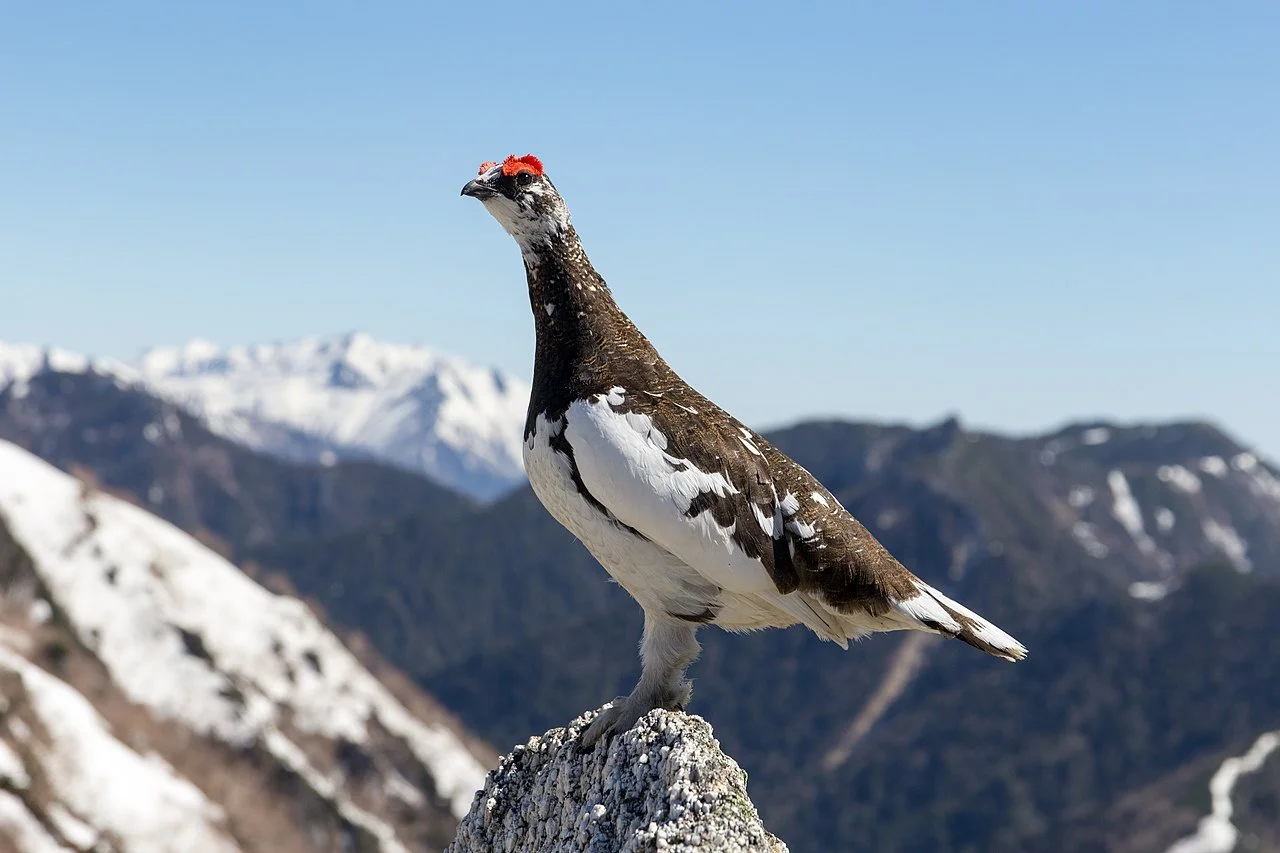
Summer Rock Ptarmigan - Daisuke Tashiro - CC BY-SA 2.0
In the high mountains, survival often depends on one simple skill: not being seen. The Mountain Hare, Stoat, and Rock Ptarmigan share a remarkable trick. None are related, yet all three independently evolved seasonal camouflage, trading mottled brown-and-gray summer coats for brilliant white winter ones as snow blankets the landscape. Mountain Hares and Rock Ptarmigans rely on that white coat to hide from foxes and birds of prey; the Stoat uses the same adaptation in reverse, sneaking closer to prey while staying hidden itself.
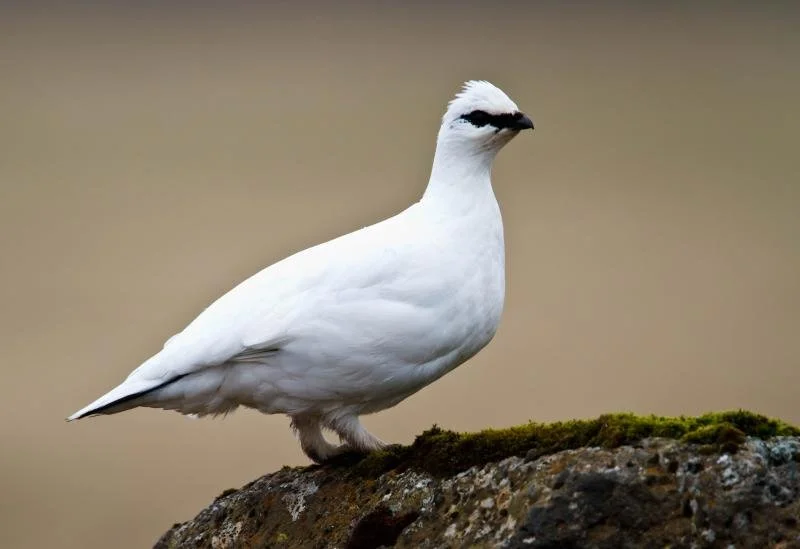
Winter Rock Ptarmigan - Ómar Runólfsson - CC BY 2.0
It's a textbook case of convergent evolution: a hare, a weasel, and a bird share almost no evolutionary history, yet all three independently arrived at the same solution to the same mountain challenge. It's also a reminder of how tightly wildlife here is tuned to the rhythm of the seasons, evolved over thousands of generations to match the timing of the snow, a rhythm now shifting as climate change alters when that snow arrives and how long it stays.
That's the ground you'll be standing on. 250 million years of geology, a battlefield turned wildflower meadow, and one of the densest wildlife lists in the Alps. Our training builds the strength and steadiness to move through all of it with confidence. The mountain will still be there. The question is whether you're ready for it.