
The Complete Kenai Field Guide: Wildlife, Land, and the People Who Call It Home
Photos and field notes researched by Aaron Herst.
Welcome to the Kenai Peninsula
When I launched VITAL Ventures in 2024, I had one clear goal: build a program that gets people to commit to their health, to train, to show up for themselves and reward that work with a team adventure on one of earth's truly awe-inducing trails.
The Grand Canyon and Alaska were always first. Both hold a personal place in my heart. Alaska especially - my sister Pam married an Alaskan over 45 years ago and raised her family there, and I've been visiting since I was 15. It's been a favorite family place to visit for most of my life. And here's a fun fact: the Harding Icefield, one of the landscapes we'll explore, is named for President Warren G. Harding, my great-great-uncle. I like to think he'd be glad to know the connection lives on out here.
So I've built very special, very local adventures around these places I love - and I’m adding to the list each year.
To go deeper into where we visit, I started the VITAL Field Series. Guides that share what we'll see, experience, and learn on trail, so the land, its wildlife, and its history become something we understand and honor as guests, not just visitors passing through.
This guide is for the Kenai Peninsula.
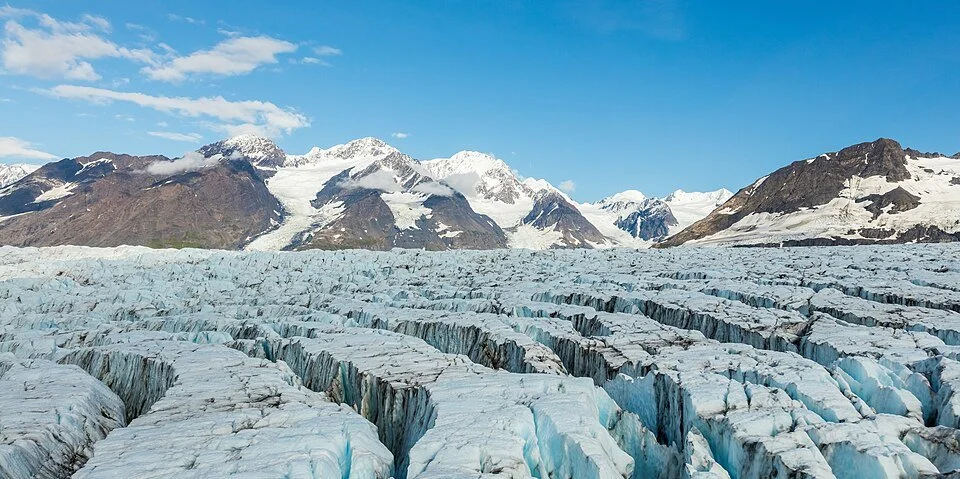
Colony Glacier - Diego Delso - CC BY-SA 4.0
Stretching between Cook Inlet to the west and the Gulf of Alaska to the south and east, the Kenai Peninsula is a landscape where an extraordinary range of environments come together in a relatively compact corner of south-central Alaska. The Kenai Mountains rise through the center of the peninsula, their valleys and fjords carved by glaciers and crowned by the vast Harding Icefield. From there, the landscape descends through alpine tundra and subalpine forests into dense temperate rainforest, wetlands, rivers, lakes, and a rugged coastline shaped by the cold waters of the Gulf of Alaska.
These different biomes create a remarkable variety of habitats. Rain-soaked coastal forests support towering Sitka Spruce, while White Spruce dominates farther inland. Open alpine slopes provide habitat for Mountain Goats and Hoary Marmots, while lowland wetlands and river valleys support Moose, Beaver, and the salmon runs that sustain much of the peninsula's wildlife. Offshore, kelp forests, rocky islands, and productive coastal waters support an entirely different community of seabirds and marine mammals. Together, these habitats make the Kenai a place where an astonishing diversity of life can be found within a relatively small area. As we head into this ecosystem, here are some of the things to keep an eye out for.
Meet the Kenai's Two Bears
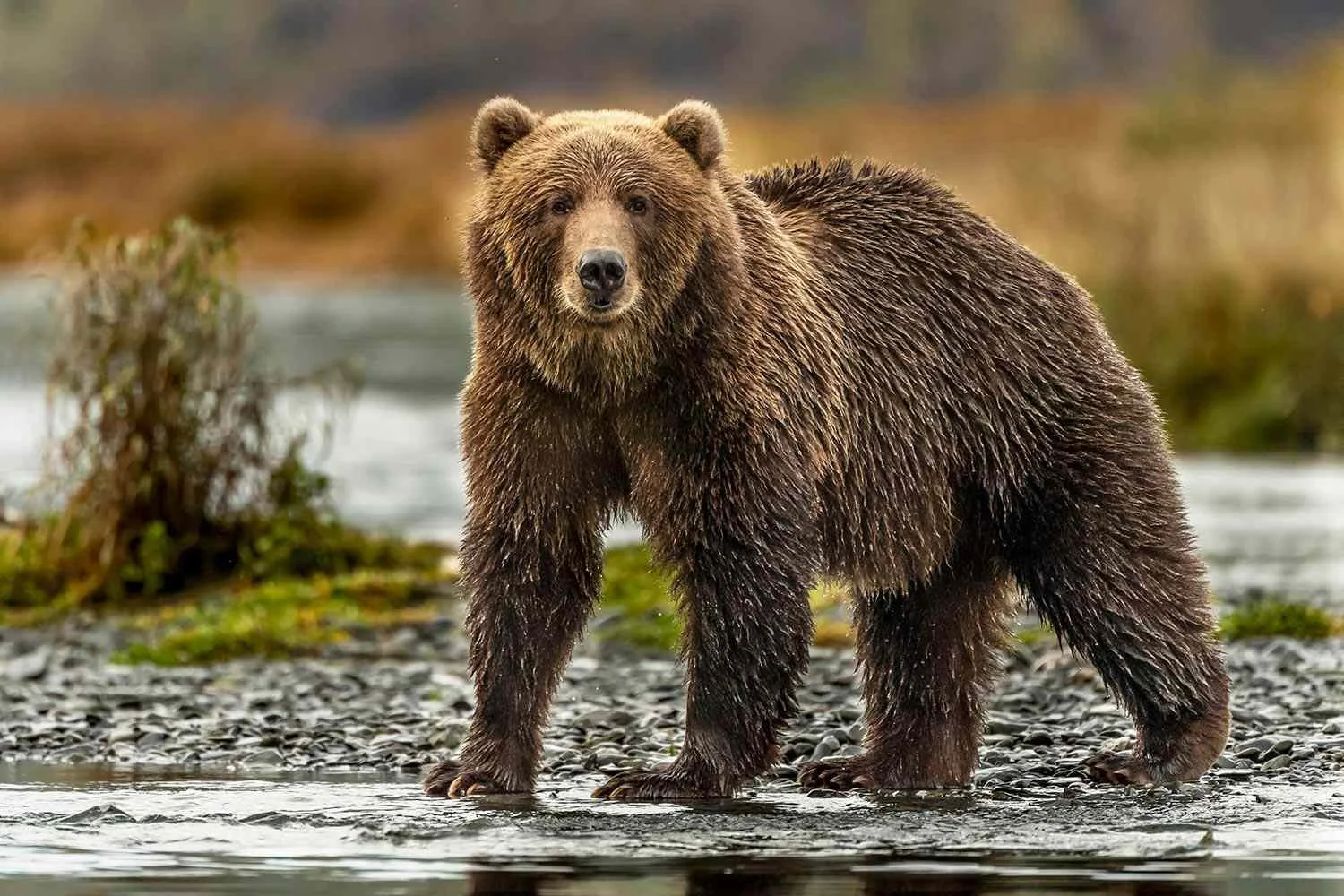
Alaskan Brown Bear - Credit: Getty Images
The Kenai is home to two resident bear species: the Brown Bear (Ursus arctos) and the American Black Bear (Ursus americanus). Brown Bears are the heavyweight champions of the coast, especially common along salmon streams, and the Kenai's population, the Alaskan Peninsula subspecies (Ursus arctos gyas), grows notably larger than the inland grizzlies. Black Bears are the forest specialists, found across much of the peninsula's lower-elevation woodlands, in a range that overlaps heavily with the Brown Bears'.
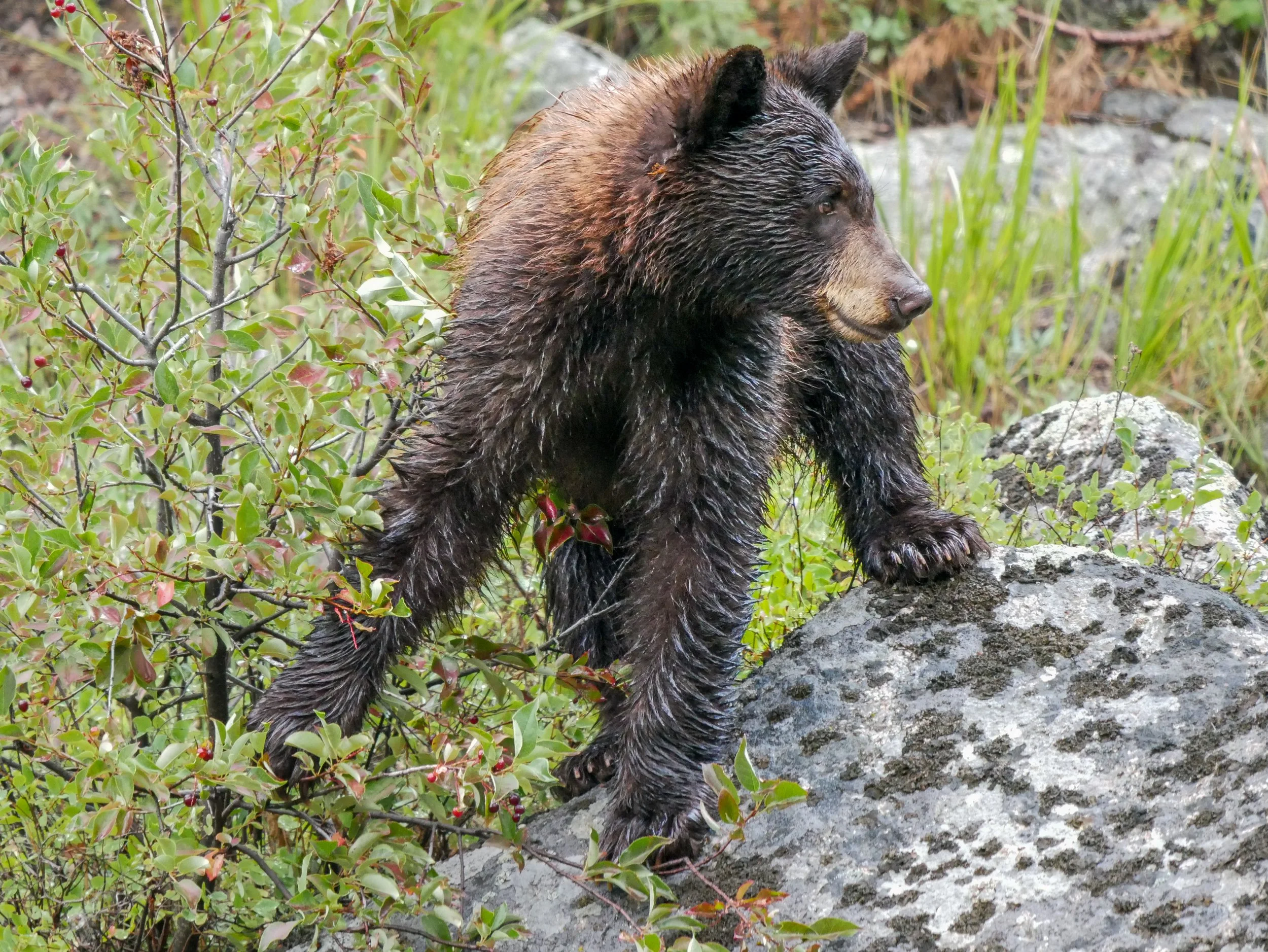
American Black Bear - Aaron Herst
A quick ID test: don't trust color. A Black Bear can be black, brown, cinnamon, or blonde. Look at the silhouette instead. Brown Bears are large and bulky with a shoulder hump, a slightly concave face, and long, visible claws. Black Bears are smaller and more slender, with a straighter profile, no hump, and short, curved claws built for climbing.
On the dinner plate: in late summer and fall, the rivers turn into a bear buffet as millions of salmon return, and a single bear can eat astonishing amounts in a short window. Outside salmon season, bears eat roots, grasses, berries, carcasses, and small mammals. Brown Bears typically dominate the best fishing spots, pushing Black Bears toward the forest edges, where their climbing ability gives them a quick escape route if needed. Come winter, both species enter torpor, living off the fat reserves built during the feeding frenzy.
Sharing the trail: avoid surprising a bear in the first place: travel in groups, make noise, keep a clean camp, and carry bear spray. If you see one, don't run; speak calmly, at a lower decibel, and back away slowly. The Kenai is one of the few places on Earth where two bear species share the same landscape, and a little awareness turns that into something to witness, not fear.
The Fish That Feed a Forest
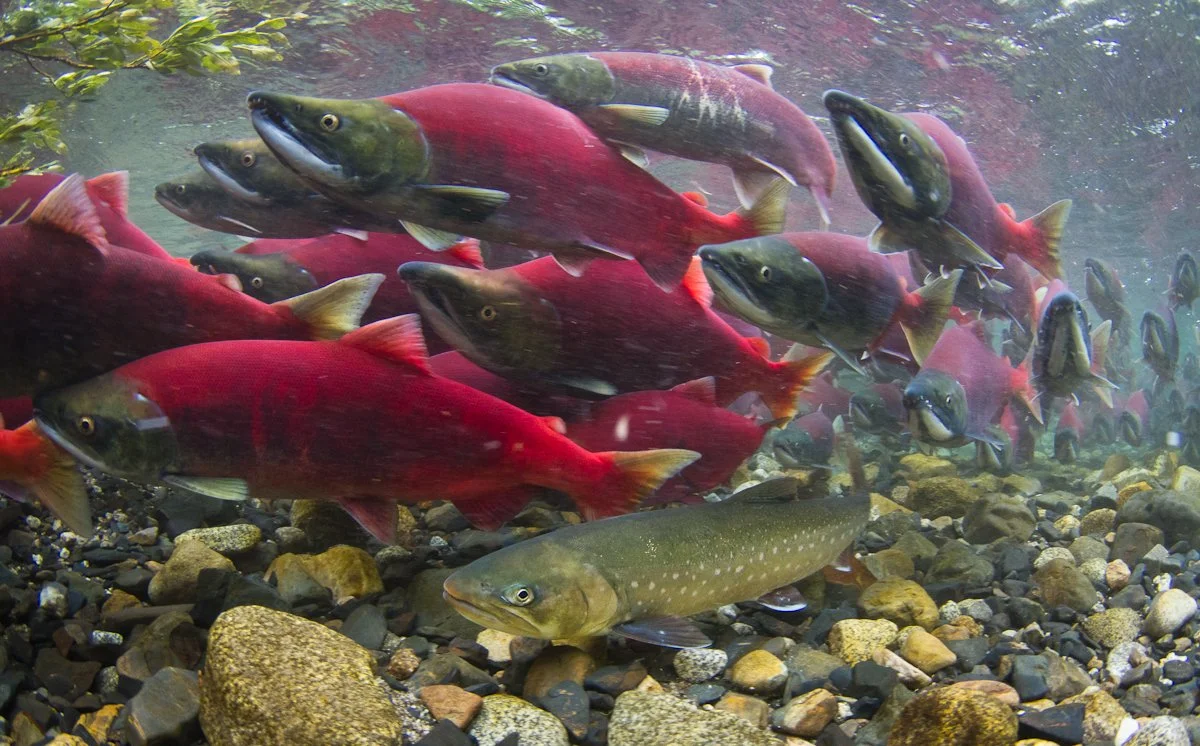
Sockeye Salmon - Jonny Armstrong
If the Kenai had a heartbeat, it would be the annual salmon run. Every year, millions of Pacific salmon leave the ocean and navigate back, some for thousands of miles, guided by smell, to the exact streams where they were born, becoming the lifeblood of an entire ecosystem along the way.
Five species call the Kenai home, each on its own schedule: King Salmon (Oncorhynchus tshawytscha), the giants at over 100 pounds, arriving first in late spring; Sockeye Salmon (O. nerka), returning in massive schools that turn rivers red; Coho Salmon (O. kisutch), extending the feast into summer and fall; and Pink and Chum Salmon (O. gorbuscha and O. keta), smaller but often staggering in number, especially along the coast. For people, these fish are just as important. Salmon have long been central to life on the Kenai Peninsula, supporting subsistence, commercial and sport fisheries, and a substantial local economy. Of the five species, sockeye is particularly valuable commercially, commanding a higher price than the more abundant pink and chum salmon.
Salmon do more than feed wildlife directly; they connect entire ecosystems. Bears haul fish into the forest, leftovers feed ravens and foxes, and as the remains decompose, ocean-derived nutrients fertilize trees, shrubs, and wildflowers far from the riverbank. The forests of the Kenai, in a very real sense, grow on salmon.
Kings of the Skies
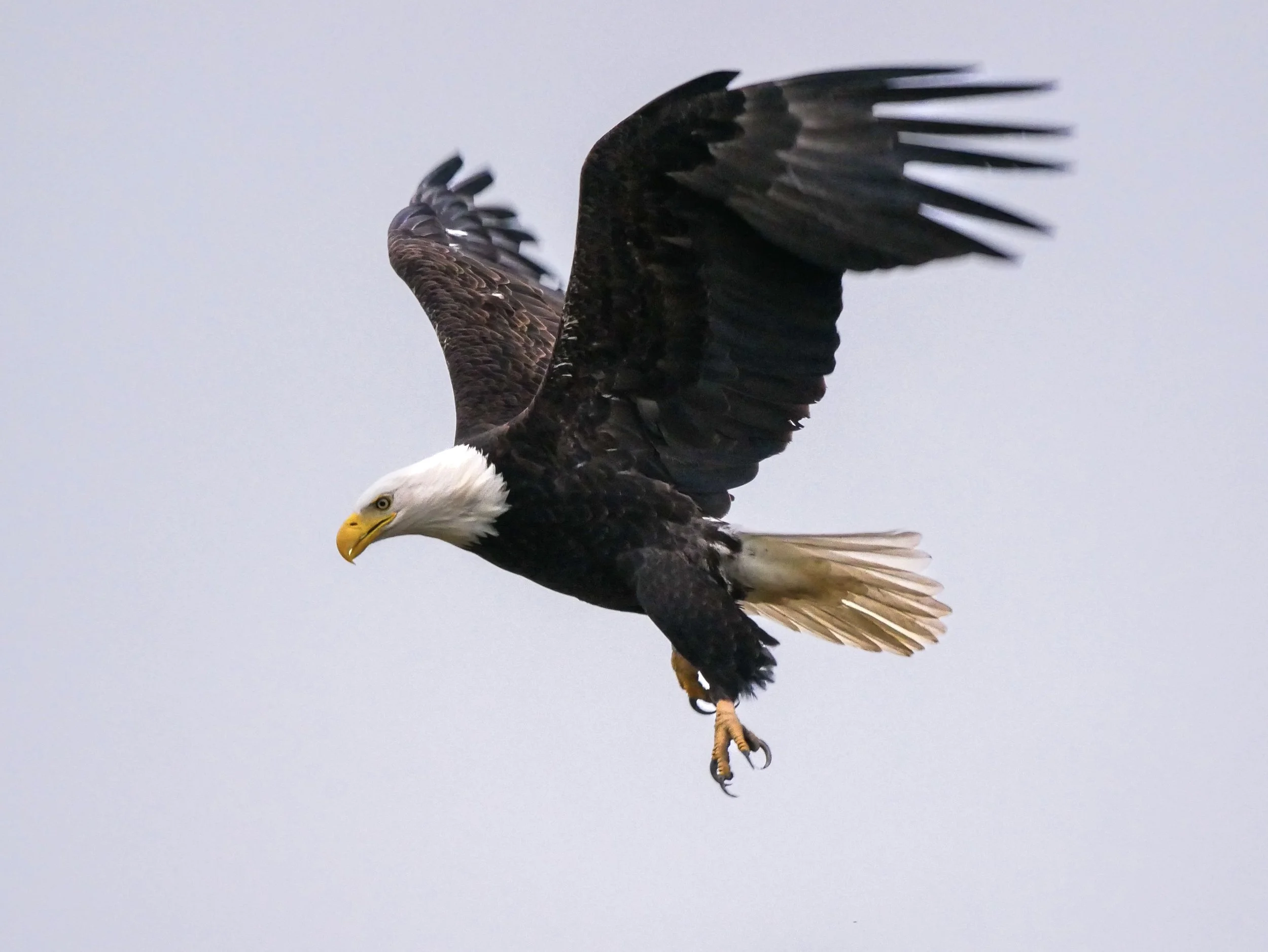
Bald Eagle - Aaron Herst
With one of the highest densities of Bald Eagles (Haliaeetus leucocephalus) in North America, the Kenai is one of the best places on Earth to see America's national bird. During the salmon runs, dozens can gather along a single river, turning a quiet stream into one of Alaska's great wildlife spectacles.
Adults are unmistakable with a brilliant white head and tail, dark brown body, and an eight-foot wingspan. They are record-breaking builders, constructing the largest tree nests of any animal. Some, used and expanded year after year, weigh more than a metric ton. While famous for fishing, eagles are true opportunists, hunting seabirds and small mammals or scavenging when the chance arises. As both predator and scavenger, they help recycle nutrients throughout the ecosystem. One soaring overhead is a sign the whole system, from salmon runs to coastal waters, is working.
Roots of the Wilderness
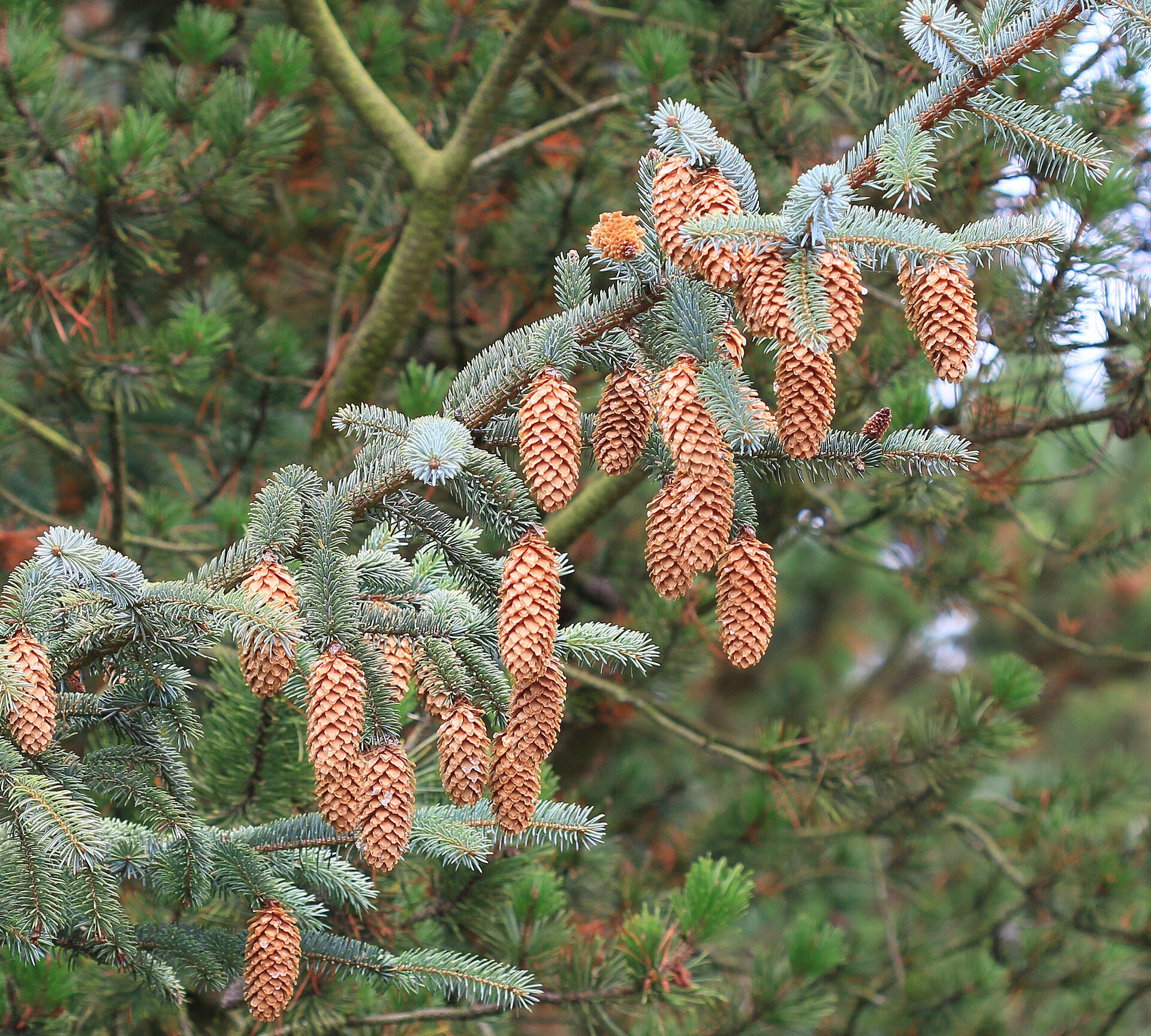
Sitka Spruce - S. Rae - CC BY 2.0
The Kenai's trees and shrubs do far more than create scenery, they provide food, shelter, and homes for countless animals, and every forest type has its own character. Along the coast, Sitka Spruce (Picea sitchensis) reigns supreme, forming dense, almost prehistoric forests in the cool, rainy climate near the Gulf of Alaska, its lofty branches hosting nesting Bald Eagles and owls. Farther inland, the hardier White Spruce (P. glauca) gradually takes over. It is similar in appearance but better suited to colder, drier conditions.
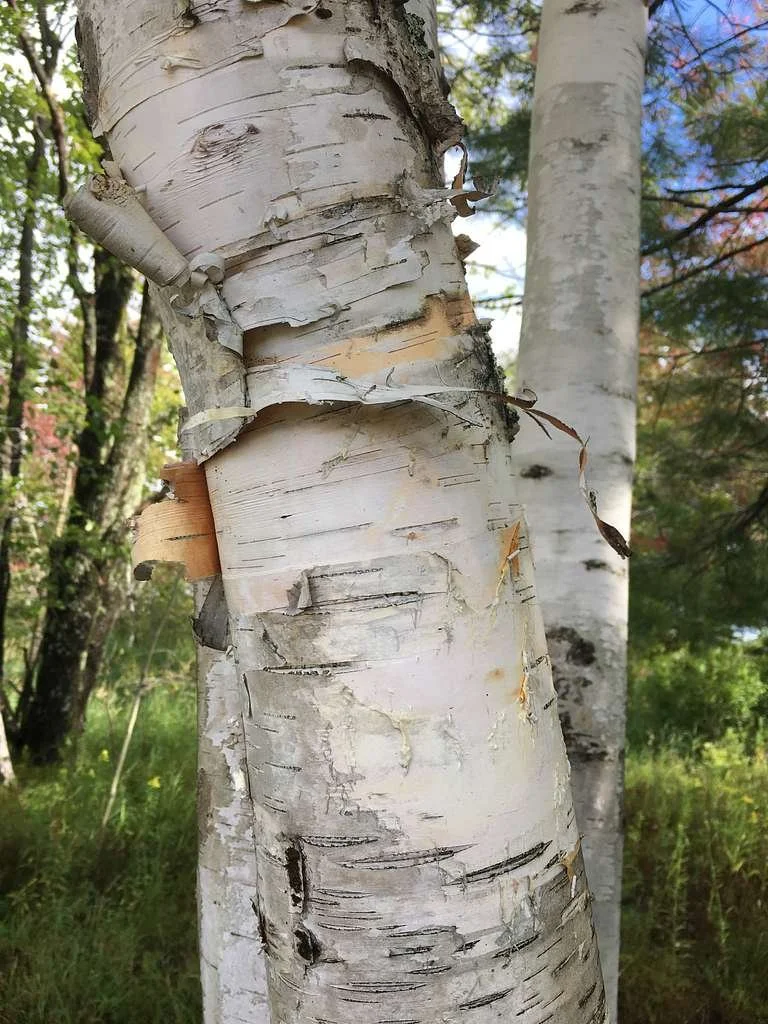
Paper Birch - Credit: NPS
The deciduous trees bring the color. Paper Birch (Betula papyrifera) is instantly recognizable by its bright white bark, once used by Indigenous peoples for canoes, baskets, and containers. It is often among the first trees to reclaim land after fire or other disturbance. Quaking Aspen (Populus tremuloides) trembles even in a light breeze thanks to its flattened leaf stalks, and in autumn, birch and aspen turn entire hillsides gold. Along streams and wetlands, Green Alder (Alnus alnobetula) and Willows (Salix spp.) fill the shrub layer, the alder acting like nature's fertilizer by enriching soil with nitrogen, the willows a favorite food of moose and beavers and among the very first woody plants to colonize ground newly exposed by retreating glaciers.
Gentle Giants of the North
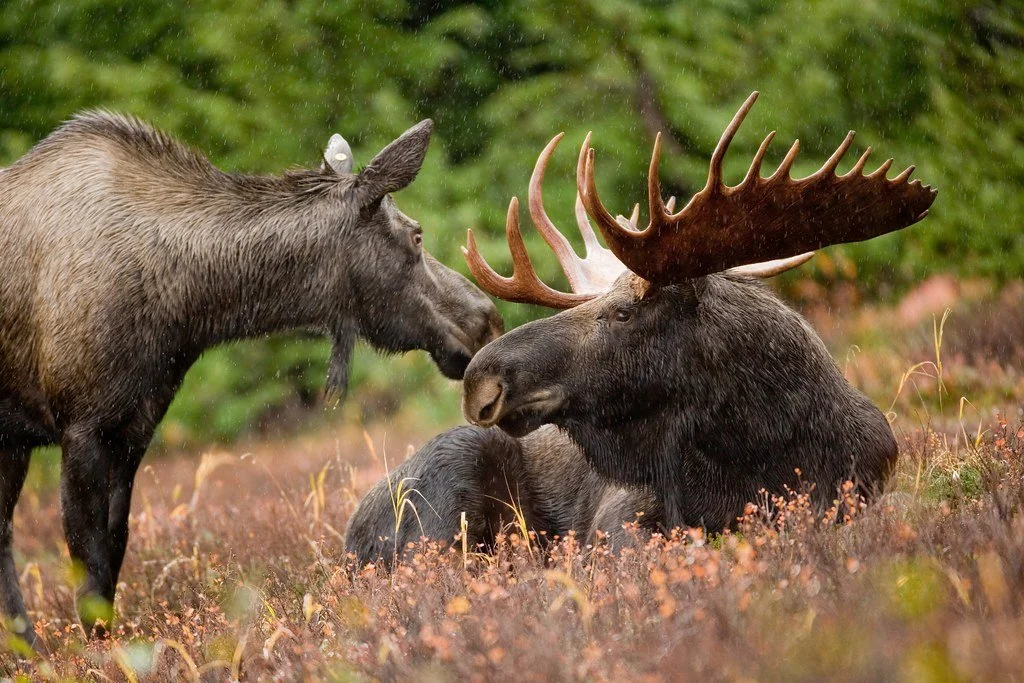
Moose - Ryan Hagerty/USFWS
The Moose (Alces alces) is the largest land mammal in Alaska and one of the easiest to spot, whether browsing a wetland or calmly crossing a parking lot. Despite their size, moose are picky browsers, feeding on leaves, twigs, and shrubs (willows topping the menu), and in summer will wade chest-deep into ponds for aquatic plants.
Autumn brings the rut, when bull moose use their enormous antlers to compete for mates in battles that echo through the forest. By late spring, cows give birth and become fiercely protective mothers, so make sure to give a cow and calf plenty of space. And don't be fooled by their laid-back look: moose can sprint up to 35 mph and kick with serious force.
The Little Animals That Keep the Kenai Running
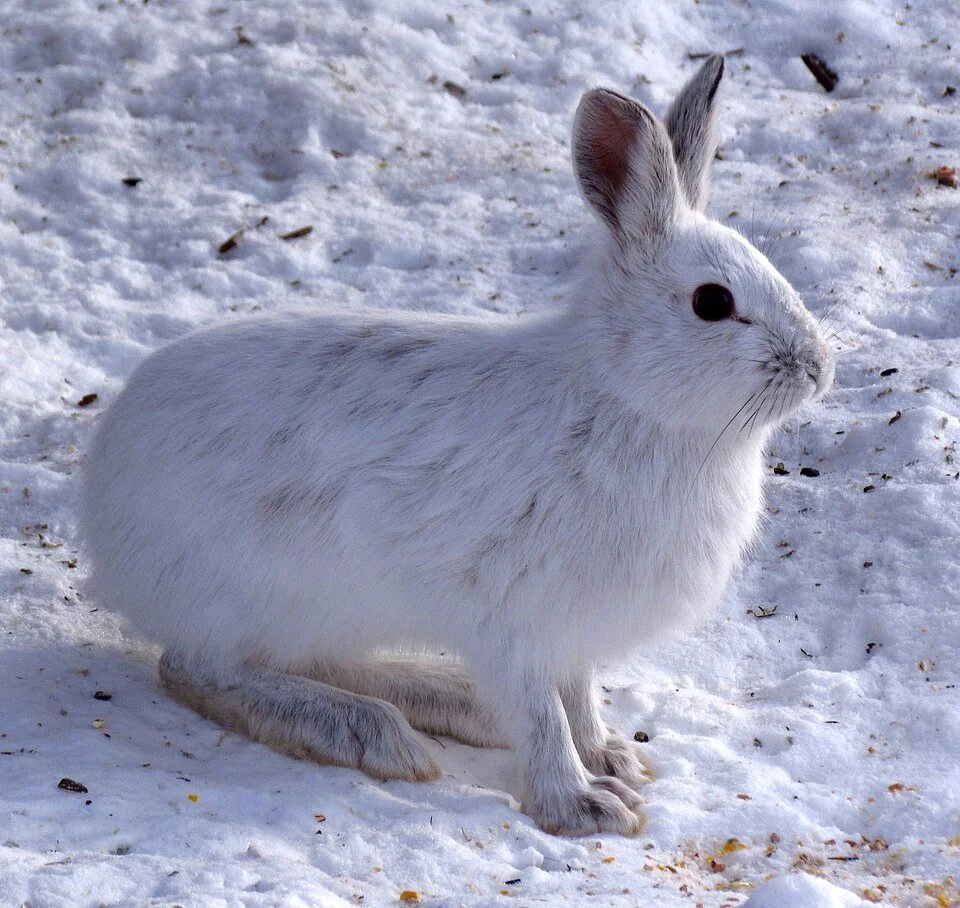
Snowshoe Hare - D. Gordon & E. Robertson - CC BY-SA 3.0
Not every wildlife encounter involves a bear or a moose. The Kenai's smallest residents spread seeds, shape forests, create habitat, and feed predators from owls to wolves. Hear a loud scolding call overhead, and you've met an American Red Squirrel (Tamiasciurus hudsonicus), busy collecting and caching spruce cones for winter and defending its stash from rivals. The Snowshoe Hare's (Lepus americanus) coat shifts from brown in summer to brilliant white in winter, and its populations naturally rise and fall over several years, rippling through the whole food web as predators respond to changing prey abundance. Along rivers, the North American Beaver (Castor canadensis) is one of nature's great engineers, damming streams into ponds and wetlands that become homes for fish, amphibians, and birds, while the Muskrat (Ondatra zibethicus) shares those wetlands, feeding on aquatic plants and building cozy lodges among the reeds.
Higher up, the Hoary Marmot (Marmota caligata), often called the ‘whistler’ for its loud alarm call, keeps watch from rocky slopes, warning its colony before diving underground. The North American Porcupine (Erethizon dorsatum), slow-moving and peaceful, carries more than 30,000 quills it doesn't throw (a common myth) as protection while it feeds on bark, twigs, and leaves. Look closely at tree trunks and you may spot the distinctive chew marks it leaves behind.
Nature's Wild Garden
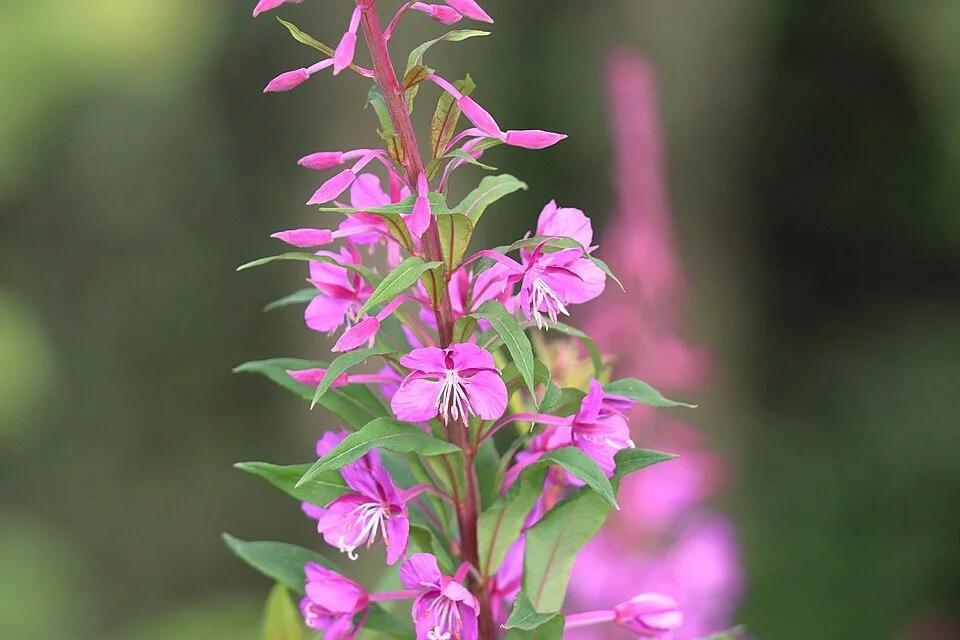
Fireweed - Marius Vassnes - CC BY-SA 4.0
When summer arrives, the Kenai bursts into wildflowers and ripening berries that feed wildlife, enrich the soil, and have sustained people for thousands of years. Fireweed (Chamaenerion angustifolium) is the icon with tall pink-purple spikes blanketing roadsides and burned forests, one of the first plants to return after wildfire. Not everything is friendly, though: Devil's Club (Oplopanax horridus) has enormous leaves and spine-covered stems best appreciated without touching.
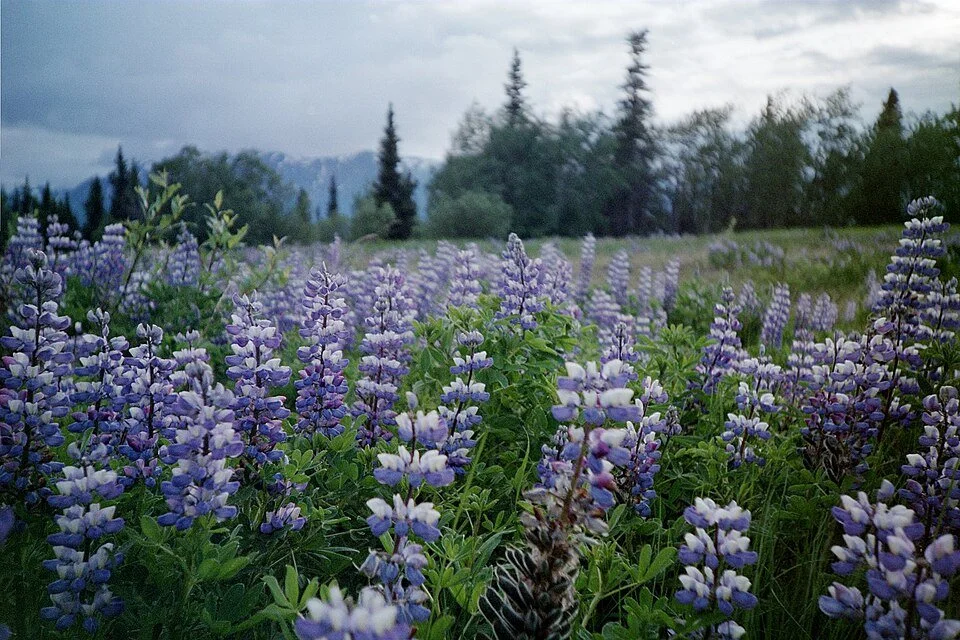
Nootka Lupine - Dennis Yang - CC BY 2.0
Nootka Lupine (Lupinus nootkatensis) brightens meadows and roadsides with brilliant blue-purple spikes and, like peas and beans, helps enrich the soil with nitrogen, though its seeds and leaves are toxic and should never be eaten. Summer's sweetest reward is the Salmonberry (Rubus spectabilis), large orange-to-ruby-red berries loved by bears, birds, and people alike (if you find a patch, you're probably not the only one who knows about it). Bog Blueberry (Vaccinium uliginosum) rounds out the season's harvest, eagerly picked by wildlife and hikers alike, alongside the fragrant Wild Rose (Rosa acicularis), whose blooms later produce vitamin-rich rose hips.
Living on the Edge
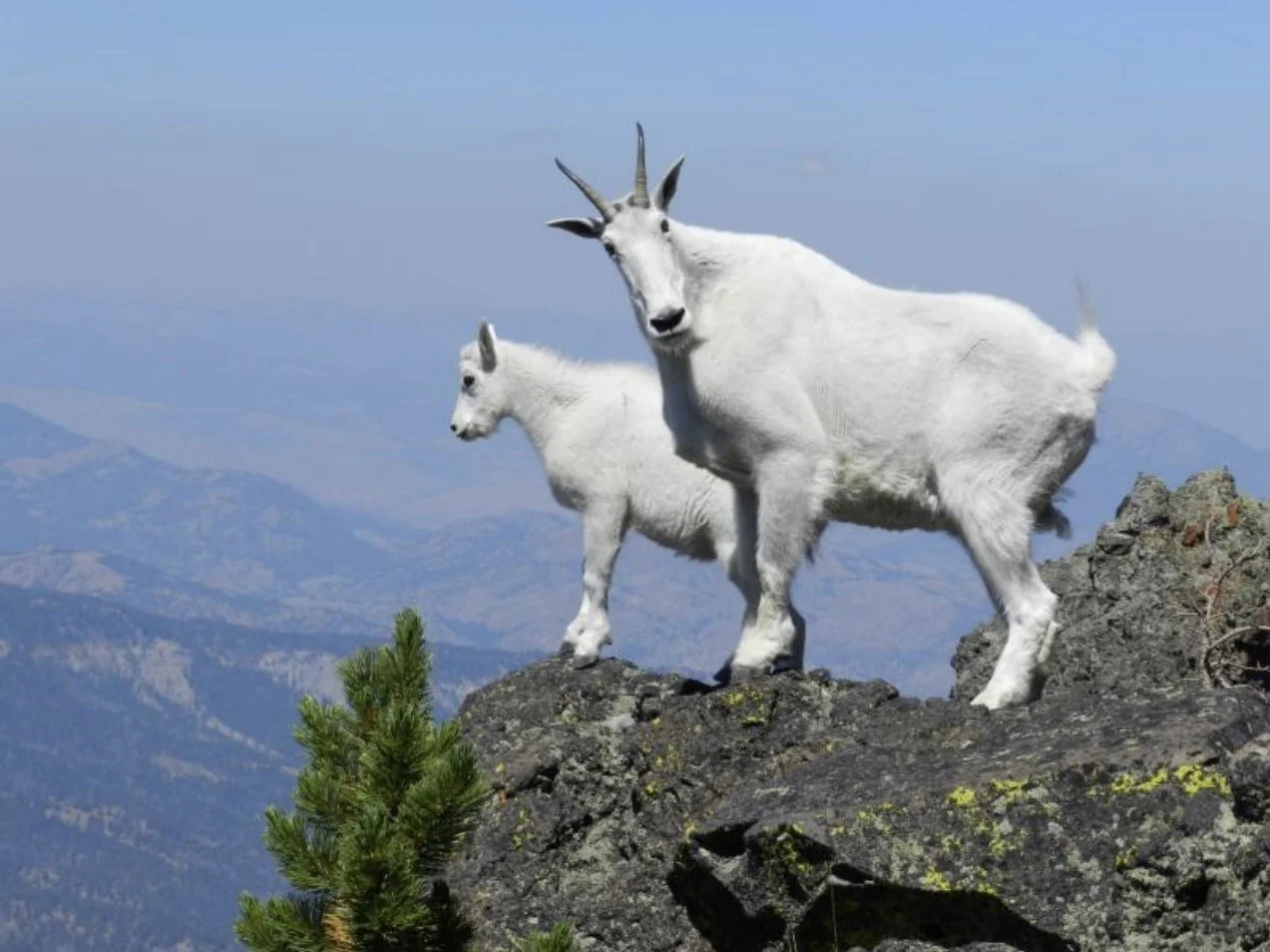
Mountain Goat - Credit: NPS
Few animals are as built for the mountains as the Mountain Goat (Oreamnos americanus). It’s not a true goat, but a bovine relative and one of the most skilled climbers on the planet, found high in the Kenai Mountains and along coastal cliffs. Their specialized hooves with hard outer edges and soft rubbery pads let them cross terrain that stops most other animals cold. In summer they graze alpine grasses and wildflowers; in winter they shift to windswept slopes where snow can't bury the vegetation. Kids are born in late spring and are climbing cliffs alongside their mothers within days, their best defense being the very terrain most predators can't follow them onto.
Wings Over the Water
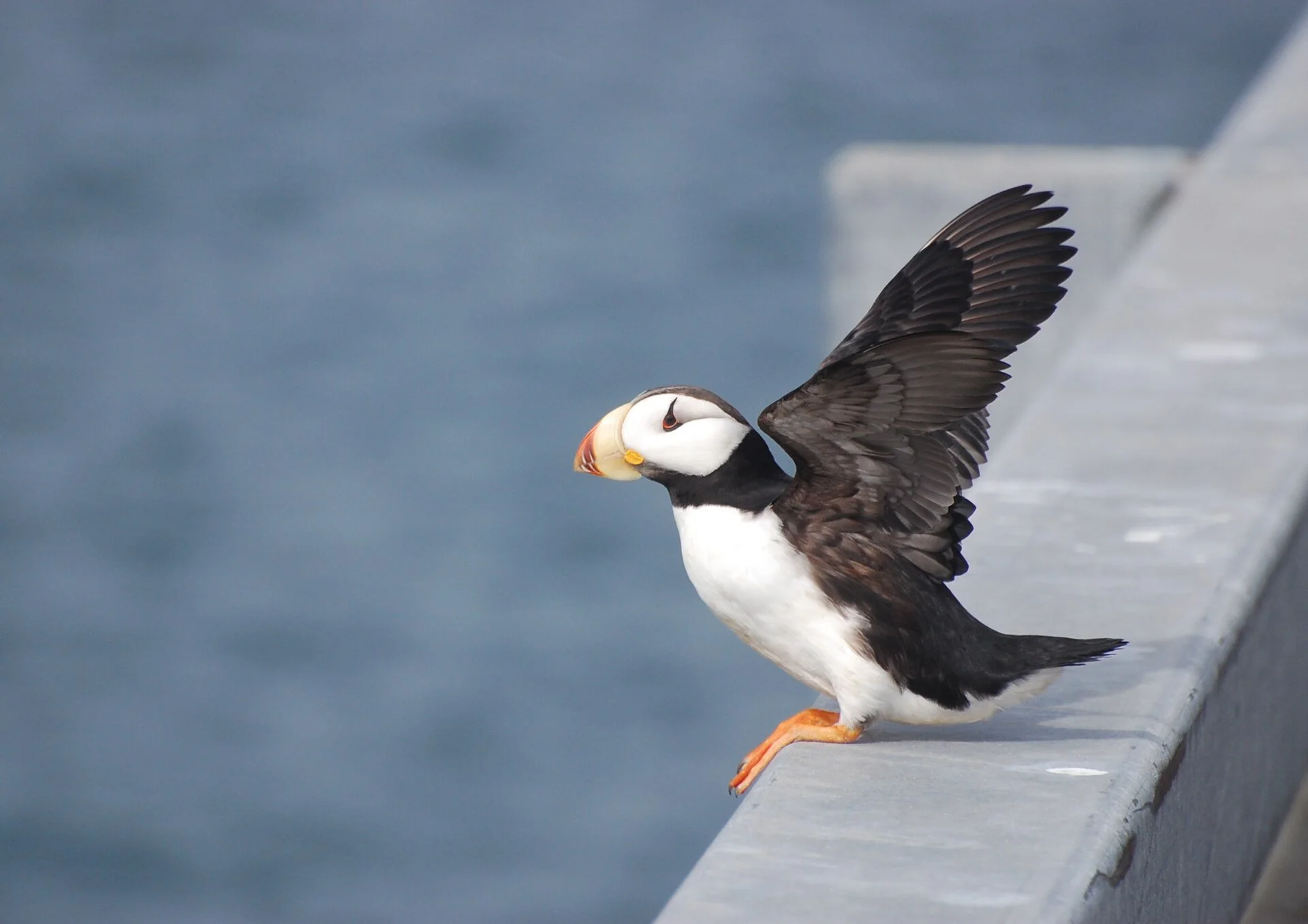
Horned Puffin - Kristine Sowl
Where the mountains meet the ocean, the Kenai becomes a haven for seabirds, its coastal waters among the most productive marine environments on Earth. Gulls are the most familiar sight, intelligent and adaptable birds working beaches, tide pools, and harbors for fish, crabs, invertebrates, and carrion. Along rocky shores, cormorants are just as common, often perched with wings spread wide to dry after a dive, before slipping back underwater to hunt.
Farther offshore, Common Murres (Uria aalge) gather in enormous cliff and island colonies, built like underwater torpedoes as they chase fish with powerful wingbeats, while the nearshore Pigeon Guillemot (Cepphus columba) dives among rocky coves, easy to spot by its black plumage and bright red feet. The Marbled Murrelet (Brachyramphus marmoratus) takes the opposite approach entirely, nesting miles inland in old-growth coastal forest despite spending its life at sea. Few birds capture the imagination like puffins, though: the Horned Puffin (Fratercula corniculata) and Tufted Puffin (F. cirrhata) bring flashes of color to the coastline with their oversized, brightly colored bills, nesting in burrows on rocky islands and diving for small fish like sand lance.
Giants of the Gulf
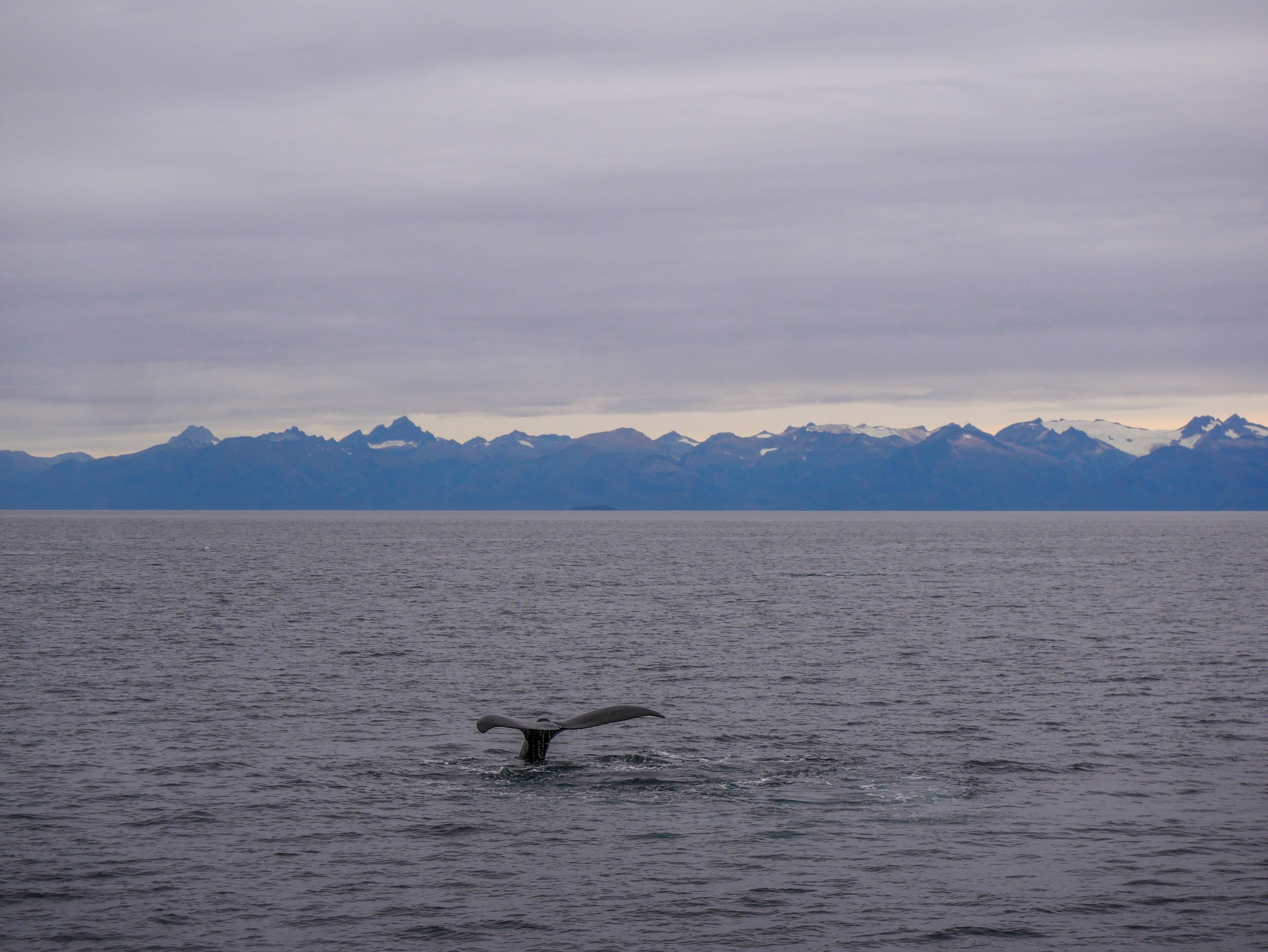
Humpback Whale - Aaron Herst
The waters around the Kenai are a highway for marine mammals, from tiny porpoises to some of the largest animals on Earth. The Sea Otter (Enhydra lutris) is the most familiar, floating in kelp beds, cracking open urchins and clams, and in the process protecting the kelp forests those urchins would otherwise strip bare. Harbor Seals (Phoca vitulina) rest along shorelines and floating ice, while much larger Steller Sea Lions (Eumetopias jubatus) gather in loud, crowded groups on rocky islands.
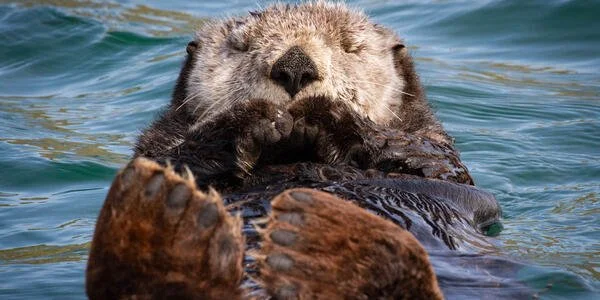
Sea Otter - Credit: U.S. Geological Survey
Each summer, Humpback Whales (Megaptera novaeangliae) arrive in Alaska's nutrient-rich waters to feast on fish and krill, sometimes using bubble-net feeding, a coordinated hunt where a group of whales traps prey in a ring of bubbles before surging upward together in a dramatic combined attack. Orcas (Orcinus orca) move through year-round, intelligent and highly social, with different pods specializing in different prey. Some focus on fish like salmon, others hunt marine mammals such as seals and sea lions. The Beluga Whale (Delphinapterus leucas), nicknamed the ‘sea canary’ for its complex range of clicks, whistles, and calls, belongs to a small, isolated, endangered population here, making any sighting especially meaningful. Two porpoise species round out the coast: the small, quiet Harbor Porpoise (Phocoena phocoena), which travels through shallow waters, and the energetic Dall's Porpoise (Phocoenoides dalli), among the fastest of all cetaceans, capable of throwing up a dramatic "rooster tail" spray as it races alongside boats.
A Landscape Shaped by People and Time
The Kenai is more than glaciers and wildlife. It's shaped by thousands of years of human history. The first people arrived between 10,000 and 7,500 years ago, following the retreating glaciers. The earliest known inhabitants were ancestors of the Dena'ina people, whose culture grew closely connected to the peninsula's salmon-filled rivers and forests; along the southern coast, the Alutiiq (Sugpiaq) people built communities centered on the ocean. Both cultures maintain strong traditions here today.
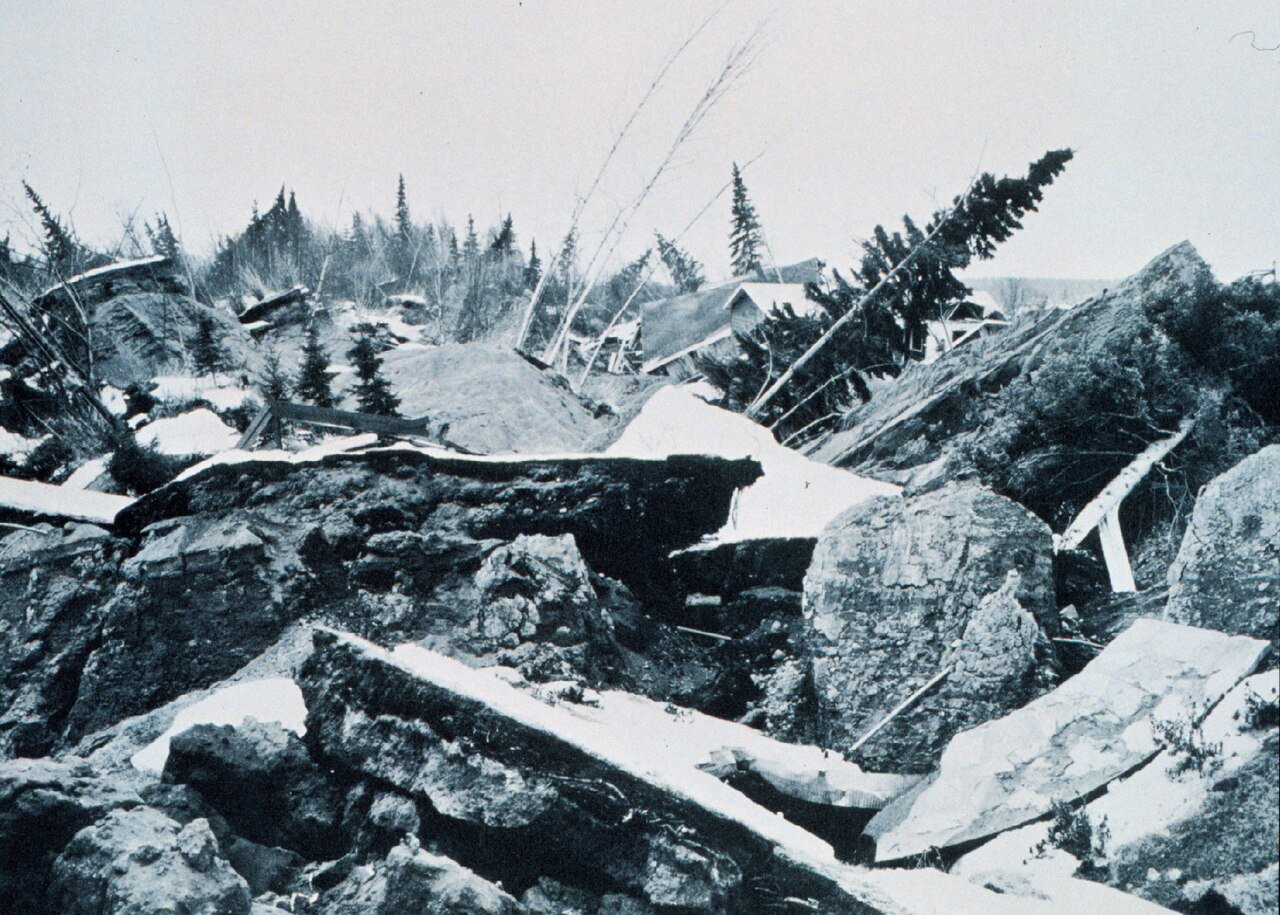
1964 Great Alaska Earthquake - Credit: NOAA
The land itself keeps changing. Glaciers carved the valleys and coastlines over thousands of years, and on March 27, 1964, the Great Alaska Earthquake, the strongest ever recorded in North America, struck south-central Alaska, its shaking and tsunamis sinking some coastal areas and raising others, drowning entire forests in seawater. Effects are still visible today.
Russian explorers and fur traders arrived in the late 1700s, and their new trade networks, settlements, religions, and diseases reshaped Indigenous communities and the region's economy. After the United States purchased Alaska in 1867, settlement expanded steadily, picking up through the twentieth century with the growth of commercial fishing, mining, transportation, tourism, and later oil and gas development. One landmark carries a surprisingly personal history: in 1923, President Warren G. Harding (Libby’s great-great-uncle!) toured Alaska, and soon after, the massive icefield at the heart of the Kenai Mountains was named in his honor, remaining one of the peninsula's defining features today. Modern Kenai is home to longtime Alaskan families, commercial fishermen, Indigenous residents carrying traditions forward, and newcomers drawn by the wilderness: a place where ancient history and everyday life sit side by side.
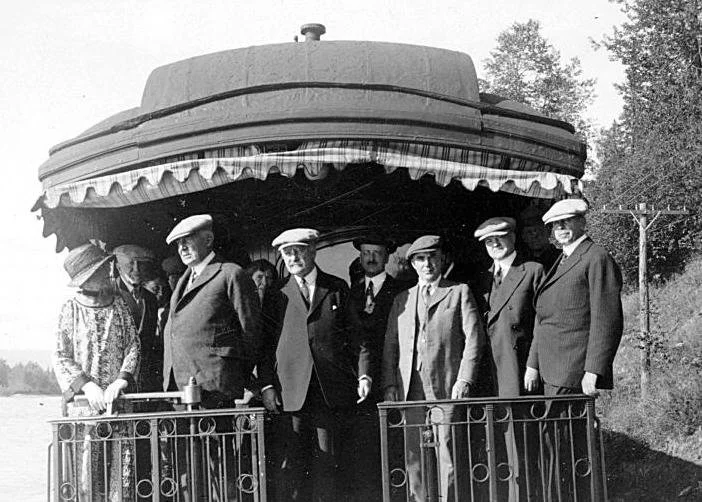
President Harding visits Alaska - Credit: United States Library of Congress
Ice That Built the Land
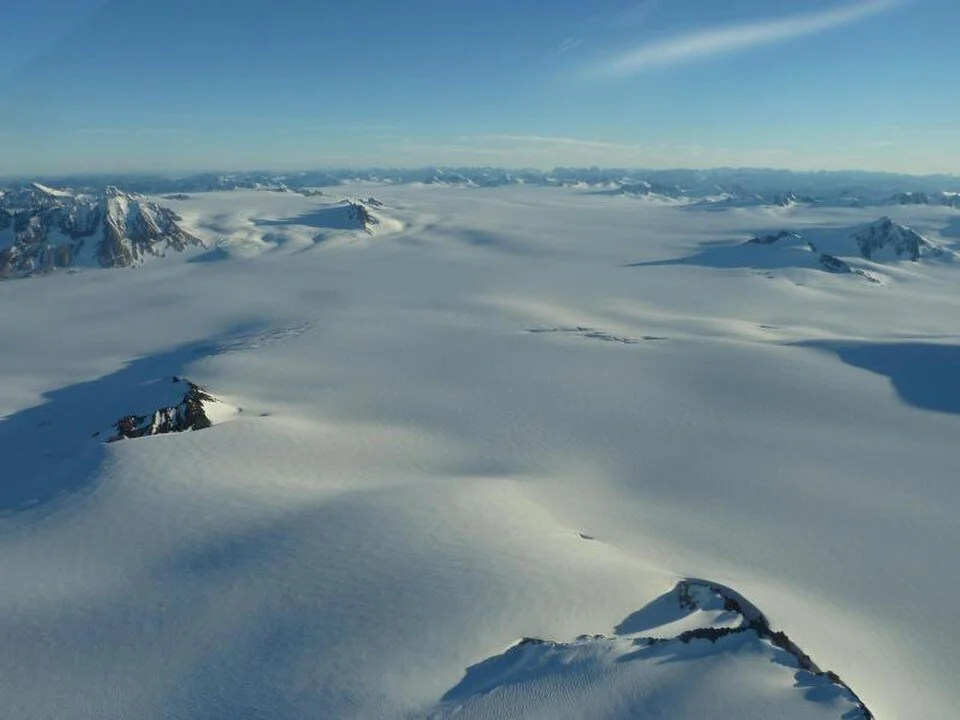
Harding Icefield - Credit: NPS
Long before forests and wildlife covered the Kenai, ice ruled the landscape, and it still shapes it today. At the heart of it all sits the Harding Icefield, one of the largest icefields entirely within the U.S., covering more than 700 square miles and feeding dozens of glaciers that flow like slow rivers through the mountains, some reaching deep coastal fjords where towering ice meets the sea. Calving events send massive chunks crashing into the ocean, even as the glacier itself creeps forward only a few feet a day.
That ice also builds the ecosystem that follows it. Glacial meltwater feeds rivers and lakes with mineral-rich water, and as glaciers retreat, they expose bare ground where life begins again. Fireweed first, then alder and willow, and eventually towering spruce forest. It's ecological succession you can walk through in real time. This same glacial force built the peninsula's dramatic range of terrain: rugged Kenai Mountains and deep fjords to the east, dense temperate rainforest along the rain-soaked southeastern coast, alpine tundra above treeline, and broad wetland-laced lowlands stretching toward Cook Inlet to the west, where the Kenai and Kasilof Rivers support the salmon runs that feed everything else.
Trail Profiles
VITAL Team Kenai heads to Alaska to hike and explore Resurrection Bay. The trails we plan to cover are the following.
Flattop Sunnyside Trail: Loop, 3.6 mi, 1,607 ft (summit at 3,520 ft). Steep hike through spruce forest and open alpine tundra to a rocky summit with sweeping views of Anchorage, Cook Inlet, and the surrounding Chugach Mountains. Look for: Mountain Goat, Hoary Marmot, and alpine wildflowers.
Lost Lake: Point to Point, 15.5 mi, 2,706 ft gain, Hard. Spruce forest into open alpine tundra, ending at a scenic backcountry lake. Look for: Mountain Goat, Moose, Hoary Marmot, and Bog Blueberry.
Harding Icefield: Out & Back, 8.8 mi, 3,234 ft gain, Hard. Climbs from Exit Glacier through forest and tundra to an overlook of the icefield itself. Look for: Mountain Goat, Black Bear, Bald Eagle, and alpine wildflowers.
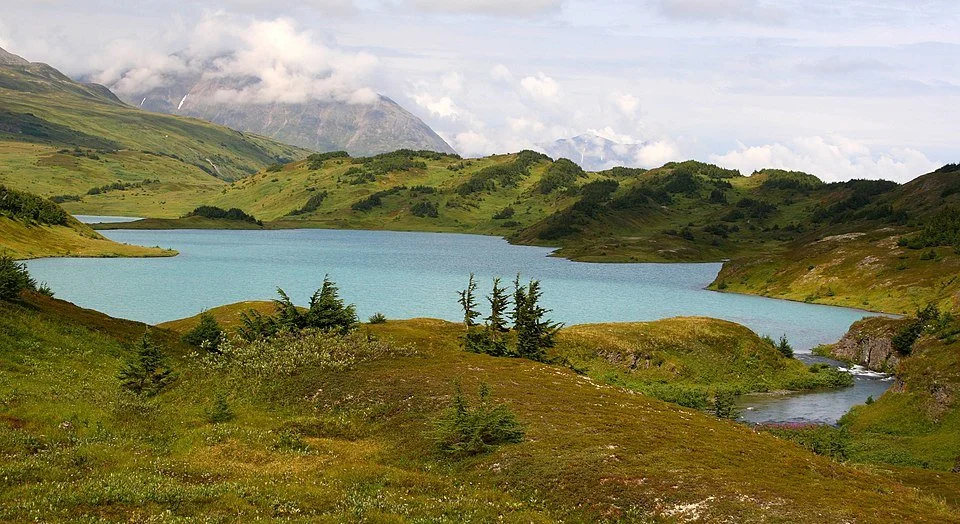
Lost Lake - Frank Kovalchek - CC BY 2.0
From the ice that carved these mountains to the salmon that feed them, the bears that fish them, and the people who've called this place home for thousands of years, the Kenai rewards a slow, attentive look. This is a landscape worth training for and showing up to fully.
Enjoy the deep history, natural beauty, and wear your bear bells.