
Heat, Cold, and Why Your Body Will Thank You for Both
A Conversation with Ginger Richardson, Founder of KiiN
Heat. Cold. Nature. Breathing. Community.
As part of Into the Still, every guest will end their hike with the opportunity to do a contrast therapy experience led by Ginger Richardson, founder of KiiN. We sat down with Ginger to talk about how she built KiiN, the science behind sauna and cold plunge, and what to expect when you step into the heat and cold together on October 18th.
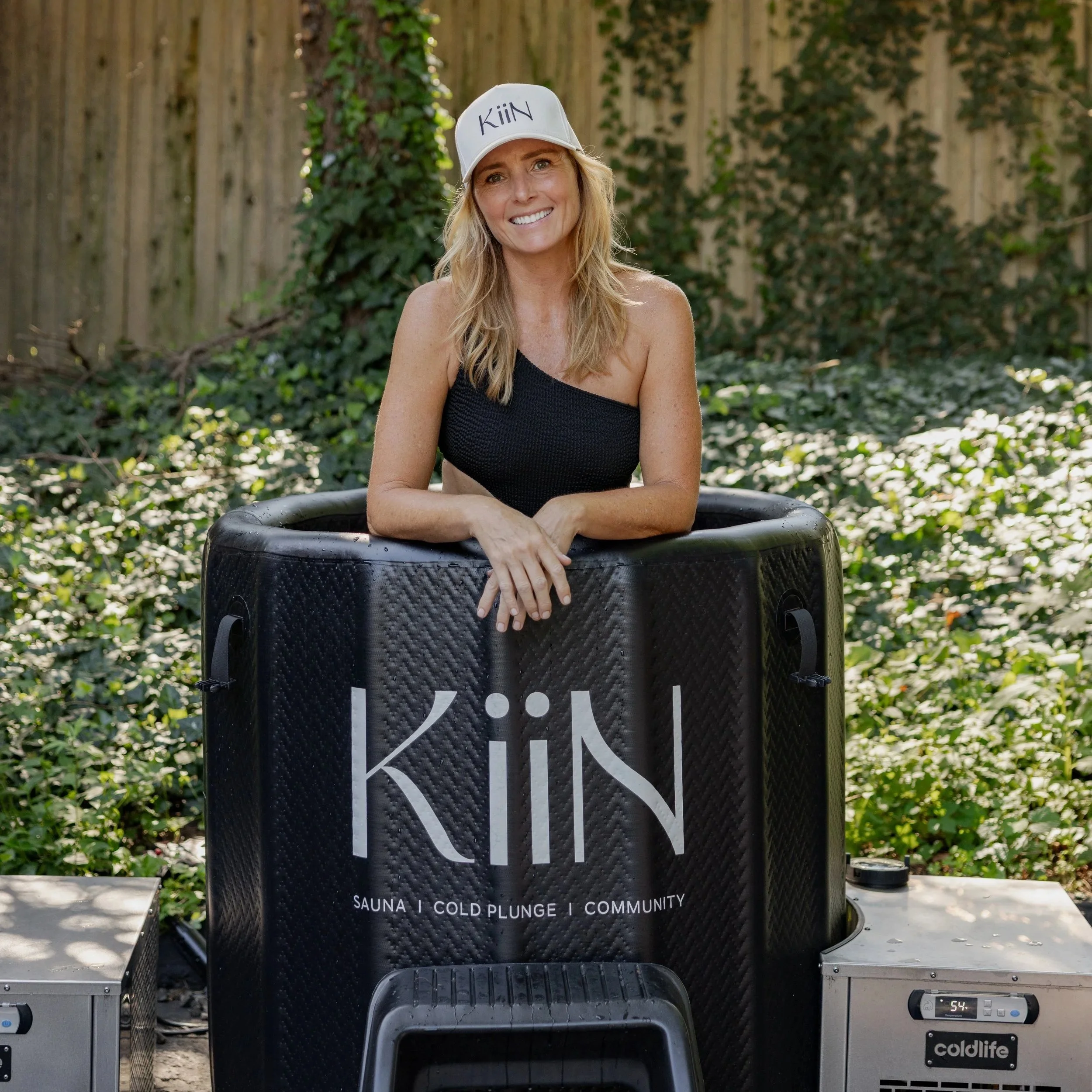
Ginger Richardson, Founder of KiiN
Getting to Know Ginger
Tell us about yourself - what's your story, and how did you decide to launch KiiN?
My path to KiiN wasn't necessarily linear. My background is in interior design, and I've always been drawn to the relationship between our environment and how we feel. Later, I trained as an Integrative Nutrition Health Coach, which deepened my interest in wellness and in the simple things we can do consistently to support our health.
KiiN really brought those worlds together for me: design, nature, wellness and, perhaps most importantly, community.
I discovered that sauna and cold exposure did something beyond simply making my body feel good. They changed my state. Heat allowed me to soften and slow down; cold required me to be completely present. And doing both alongside other people created this incredible sense of connection.
I wanted to build a place where people could experience that, not as an intimidating biohacking ritual, but as something beautiful, social and accessible. KiiN grew from that idea: a wood-fired sauna and cold-plunge experience centered around nature, community and human connection.
Did this come from a personal health need, a longer relationship with sauna culture, a pull toward design, or something else entirely? What was the moment you knew this was the business you wanted to build?
It was really a combination of all of those things.
I've always believed that our physical environment influences our nervous system, which is probably the designer in me. Then my work in health and wellness made me increasingly interested in practices that ask the body to adapt rather than simply making it comfortable.
But the real revelation was experiencing contrast therapy myself. There is this remarkable moment when you get into cold water and every part of your brain tells you to get out. Then you slow your breathing, stay with the discomfort, and realize: I'm okay. I can do this.
That feeling translates far beyond the plunge.
I began imagining a very different wellness experience - outdoors, wood-fired, beautiful but unpretentious, with people talking to each other rather than staring at their phones. I didn't want to build another sterile wellness facility. I wanted to create a ritual and a community around something humans have practiced in different forms for centuries.
That's when KiiN became very clear to me.
Credentials & Credibility
Is there a certification for guiding people through heat and cold therapy? What's yours, and what did the training involve?
Yes. I'm a certified Contrast Therapy Coach as well as an Integrative Nutrition Health Coach.
My contrast therapy training covered the physiological responses to heat and cold, appropriate temperatures and exposure times, breathing and nervous-system regulation, contraindications and, importantly, how to introduce people to cold safely and progressively.
But certification is only part of being a good guide. You have to watch the person in front of you. People's tolerance for heat and cold varies enormously, and I never believe that suffering longer or going colder automatically means you're getting more benefit.
My job isn't to prove how tough someone is. It's to help them find an appropriate edge and learn how to remain calm there.
Is this work recognized as a therapy in a clinical sense, or is it better understood as a wellness practice? How do you draw that line for your members?
I think that distinction is incredibly important.
I use the term "contrast therapy" because that's the established term for alternating heat and cold exposure, but KiiN is a wellness practice, not medical treatment. I'm not diagnosing conditions or treating disease, and I never want someone to substitute a sauna or cold plunge for appropriate medical care.
There is meaningful research around sauna, cold exposure and recovery, but the strength of evidence differs depending on the claim. That's something I think the wellness industry needs to be transparent about.
So at KiiN, we focus on what we can responsibly offer: a guided practice that challenges the body, encourages relaxation and recovery, builds resilience and creates an opportunity to disconnect from technology and reconnect with yourself and other people.
The KiiN Offering
Walk us through what a member actually experiences at KiiN - what's included, and how does a typical session unfold?
The first thing people usually notice is that KiiN doesn't feel clinical.
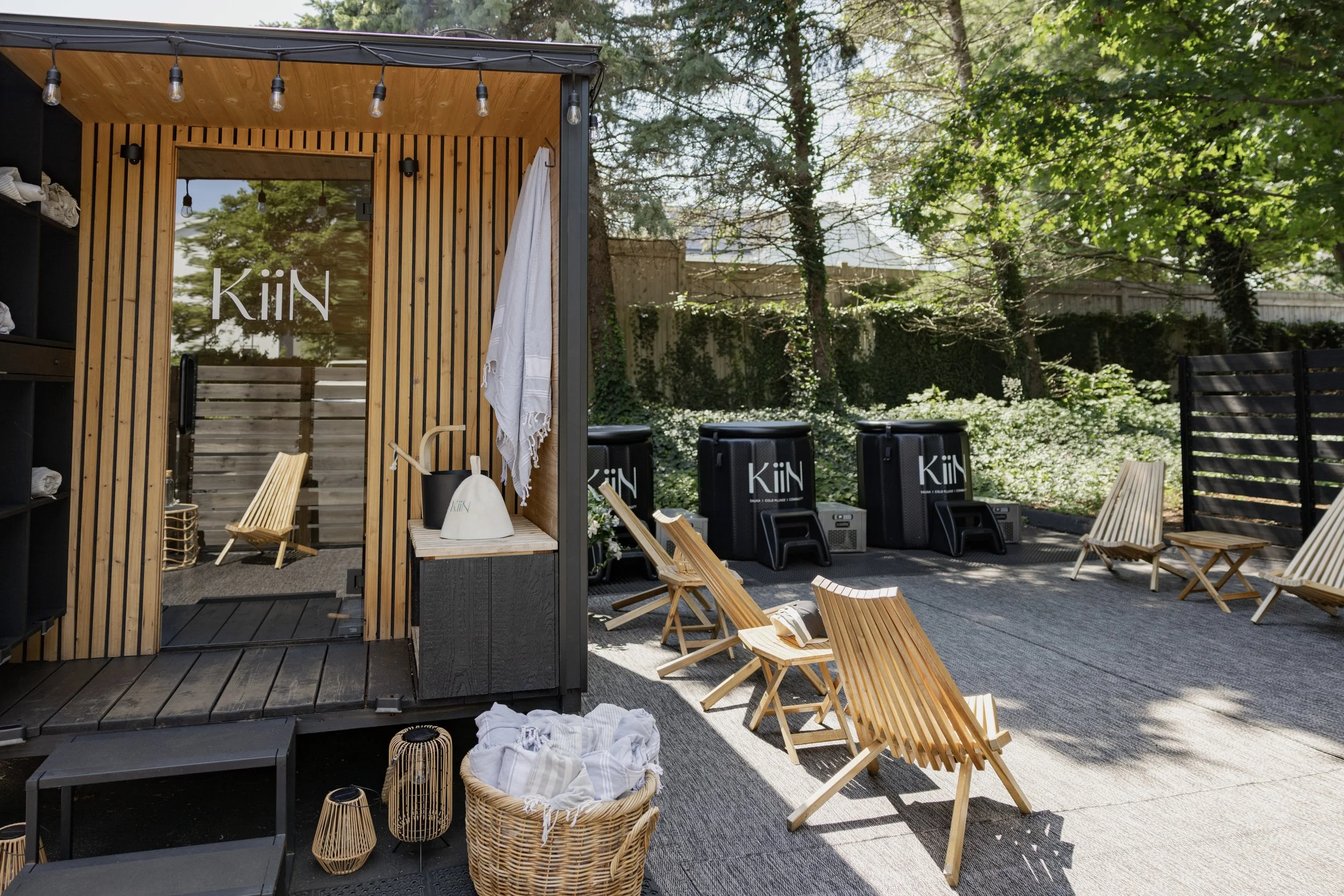
Our sauna is a traditional Nordic-style, wood-fired sauna. You hear the fire. You smell the wood. You're outside. There is music, filtered water, towels, a place to sit and recover, and three cold plunges.
I explain what we're going to do before we begin, particularly for someone who hasn't plunged before. Then we start with heat.
A typical round might be approximately 10–15 minutes in the sauna, followed by a short cold immersion, then recovery. We generally repeat that cycle several times during the session.
But I don't stand there with a stopwatch telling everyone they have to do exactly the same thing. I want people learning to read their bodies.
And something really lovely happens during the session. People arrive thinking it's about sauna and cold water. Then the phones disappear. Conversations begin. Strangers encourage one another. Someone does their first plunge and everyone celebrates.
That's KiiN to me.
Is there a protocol you guide people through, or does it vary session to session?
There is a framework, but not a rigid prescription.
For most people I like repeated rounds of heat, cold and recovery. Someone new to cold might plunge for only 20 or 30 seconds. Someone acclimated may stay longer. The sauna is similar: we're looking for a meaningful heat exposure without turning it into an endurance contest.
I also change the experience depending on what someone has just done and what they want from the session. An athlete arriving immediately after a hard effort is different from someone arriving after a stressful workweek.
One of my biggest messages is: more extreme isn't necessarily better.
The Science
What's the science behind heat and cold exposure - what's actually happening in the body?
Heat and cold are both controlled physiological stressors, but they ask very different things of the body.
In a sauna, the body works to dissipate heat. Heart rate and circulation increase, blood vessels dilate and sweating increases. Repeated heat exposure is also associated with cardiovascular adaptations and other physiological responses that researchers continue to study.
Cold creates almost the opposite immediate response. Blood vessels in the extremities constrict, blood pressure can temporarily rise, breathing can accelerate and the sympathetic nervous system is activated. Cold exposure is also associated with changes in catecholamines — the chemical messengers involved in alertness and the stress response.
Then there's the psychological component that fascinates me.
Cold forces you into the present moment. You can't really think about tomorrow's meeting while your body is telling you, This water is cold. You learn to control your breathing and your response rather than immediately escaping the discomfort.
Over time, that becomes a practice in resilience.
The science around sauna is particularly compelling. Regular sauna bathing has been associated in observational research with lower cardiovascular and all-cause mortality and lower dementia risk, although those studies show association rather than proving sauna itself caused those outcomes.
Why do sauna and cold plunge work better together than either does alone? What is contrast therapy actually doing for the body?
I would phrase this slightly differently: they don't necessarily work better together for every outcome. Heat and cold each have benefits independently.
What makes contrast special is the experience of moving deliberately between two very different physiological states.
Heat promotes vasodilation and increases skin blood flow. Cold produces peripheral vasoconstriction and a strong autonomic response. Alternating the two creates a repeated challenge to thermoregulation and circulation.
In sports research, contrast water therapy has shown some benefit for perceived fatigue, soreness and recovery compared with simply resting, although the evidence isn't strong enough to say it's universally superior to other recovery methods.
And then there's something science has a harder time measuring: how you feel afterward. People regularly describe feeling calm but alert, almost reset.
That's one of the reasons I love the combination.
Do the protocols change based on what someone's there for? For example, would you guide a hiker preparing for a big effort differently than someone managing stress, or someone recovering from an injury?
Absolutely.
For stress management, I'm often less interested in how cold we can get and more interested in breathing, slowing down and creating a shift in state.
For an athlete after a demanding endurance effort, cooling may feel wonderful and cold-water immersion has evidence supporting certain aspects of recovery after strenuous exercise.
For someone recovering from an injury, I'm much more cautious. Contrast therapy isn't a replacement for physical therapy or medical treatment, and whether cold is appropriate depends on the injury and where someone is in recovery.
There's also an important nuance for strength training: routinely using intense cold immediately after resistance training may not always be desirable if maximizing muscular adaptation is the goal.
So the question is never simply, "What's the best protocol?"
It's best for whom, and for what?
How do recommended sauna and plunge temperature and time differ between women and men, and how should that shift by age - say, 30s versus 40s, versus 50s versus 60s and beyond?
I don't believe there should be a rigid "women do this, men do that" protocol.
Women and men can have differences in thermoregulation, body composition and cold perception, and hormonal status can influence temperature regulation. Age, cardiovascular health, medications, hydration, fitness and previous exposure can matter just as much.
That's why I prefer individualized progression rather than prescribing colder temperatures based on gender or age.
For a healthy beginner, I generally prefer moderately cold water and short exposures. You don't need ice floating around you to receive a stimulus.
As people get older, I'm particularly mindful of blood pressure, cardiovascular history, medications and balance getting in and out of the plunge. Cold produces an immediate cardiovascular response, so anyone with cardiovascular disease or significant medical concerns should discuss cold exposure with their healthcare provider.
My philosophy is simple: use the minimum effective dose.
A quick note: this is general wellness information, not medical advice. If you have a heart condition or take medication that affects blood pressure, check with your doctor before trying contrast therapy.
Into the Still, On Site
Our members will come straight off the 8-mile hike on October 18th - what will their heat and cold experience with you actually look like that day?
First: hydrate.
After eight miles, I don't want anyone racing directly into an extremely hot sauna or freezing plunge. We'll give people a moment to settle, drink water and let their heart rate begin to come down.
Then we'll guide them through the experience.
We'll start with the wood-fired sauna, allowing the body to warm and relax. From there we'll move into a brief cold plunge — especially brief for anyone new to cold — followed by recovery.
We'll repeat according to how each person is responding.
After a long hike, I want the experience to feel restorative, communal and energizing rather than like another athletic challenge.
You've already done the hard thing. Now we use heat and cold to help you transition out of effort.
What would you recommend for someone like me - an endurance athlete, a woman, 60 years old - as the best protocol for time in the sauna and time in the plunge? What temperatures should I be targeting, and how does that recommendation shift for someone younger, or someone older?
Assuming you're healthy, well hydrated and accustomed to exercise, I would start conservatively rather than chasing extreme numbers.
For a traditional sauna, something in roughly the 160–180°F range can provide a meaningful heat exposure, with perhaps 10–15 minutes at a time, depending entirely on comfort and acclimation.
For cold, I don't think you need 35°F water. A plunge in approximately the 50s°F is plenty cold for most people, particularly after heat. A beginner might start around 20–30 seconds and build toward roughly a minute or two as they become acclimated.
At 60, I wouldn't automatically make the protocol dramatically different from someone at 40 simply because of age. I'd pay much more attention to cardiovascular health, medications, blood pressure, hydration and prior experience.
And if someone is older, medically complex, light-headed after heat, or new to cold, we reduce the intensity.
The goal isn't to survive the coldest plunge.
The goal is to create an appropriate physiological stimulus and walk away feeling better.
Results & Impact
What results are you seeing in the people who come through regularly? Any moments that stick with you?
What people tell me most often is that they sleep incredibly well afterward, feel calmer, clearer and more energized.
But the changes I love most aren't always physical.
I've watched people arrive terrified of the plunge and tell me, "I can't do cold." We work on the breath. They get in for 20 seconds. Then they come back the next week and stay a little longer.
Eventually the conversation changes from I can't to I did.
That matters.
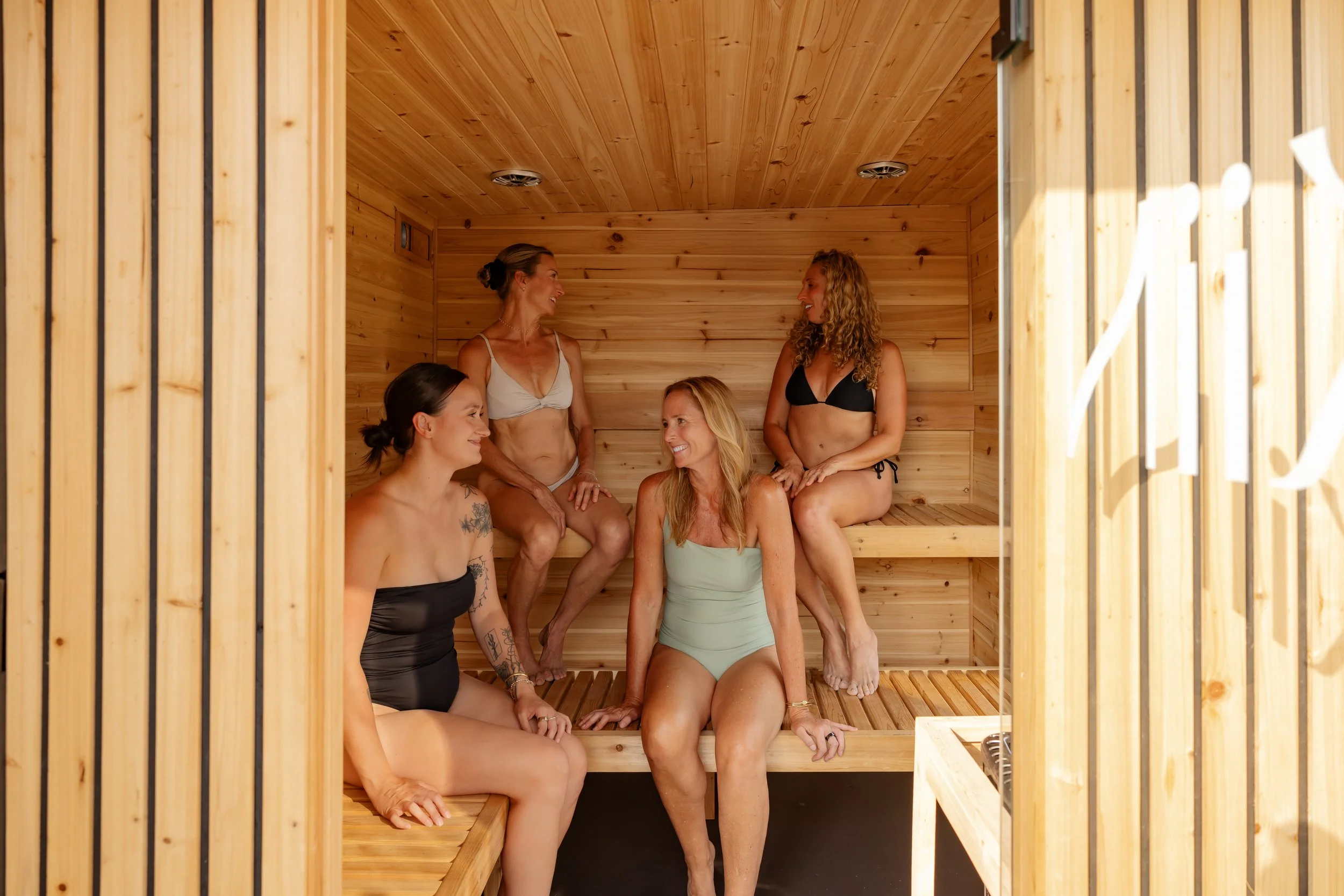
And I've watched friendships form at KiiN. People who would never otherwise have met sit around afterward drinking tea and talking.
We spend so much of our lives connected digitally and disconnected physically. Creating a place where people voluntarily put their phones down and do something difficult together feels increasingly important.
The Bigger Picture
Sauna and plunge culture feels like it's everywhere right now. Is that real growth, or does it just look that way to people already tuned into health and fitness? Are you seeing more people join clubs, or more people investing in home setups?
I think the growth is absolutely real.
Cold plunges have moved from elite sports and niche wellness circles into gyms, hotels, spas, homes and social wellness clubs. Sauna culture is also having a resurgence in the U.S., even though communal bathing traditions have existed around the world for centuries.
But I think something larger is happening.
People are craving analog experiences.
We're overscheduled, overstimulated and constantly on screens. Sauna creates an environment where you can't really multitask. Cold demands complete presence. And communal sauna gives people permission to sit together and simply talk.
Home setups will continue to grow, but I think communal sauna will grow alongside them because the community is part of the medicine - using "medicine" there in the human sense, not the clinical one.
That's really the reason behind the name KiiN. It's about kinship. Connection.
What do you enjoy most about running KiiN?
The people. Without question.
I love introducing someone to this practice, but even more than that I love watching what happens between people.
There is something incredibly equalizing about sitting in a sauna together. Titles disappear. Phones disappear. Everyone is sweaty. Then you stand beside someone who's nervous about getting into cold water and say, "You've got this."
It's very human.
I created KiiN because I believed heat and cold could make people feel better. What I didn't fully understand at the beginning was how much connection would become the heart of it.
That's the part I love most.
Ginger's Best Tips
If it's your first time going through the heat and cold protocol, here's what Ginger recommends:
Don't chase extremes. Colder and longer aren't automatically better.
Control your breath. The first few seconds of cold are the hardest. Slow your exhale and let your body realize you're safe.
Hydrate before you arrive. Heat plus exercise plus dehydration is not a good combination.
Listen to your body, not your ego. Get out of the sauna or plunge when your body tells you to.
Be present. Put the phone away. Talk to someone. Feel the fire, the air and the water. That's part of the experience.
A Final Thought
I think wellness has become unnecessarily complicated.
We're constantly being sold another supplement, wearable, machine or optimization strategy. Yet some of the practices that make us feel most human are incredibly simple: heat, cold, nature, breathing and other people.
That's what I want KiiN to bring back.
Yes, I'm fascinated by the science. But I'm equally interested in ritual.
Sit around a fire. Get hot. Get uncomfortable. Control your breath. Step outside. Look at the sky. Talk to another human being.
Sometimes wellness can be that simple.
- Ginger Richardson, Founder of KiiN
If you'd like to include KiiN in your next gathering, don't hesitate to reach out to Ginger at ginger@kiinsauna.com.
Get the Adventure Guide · Save Your Spot
Come as a stranger. Leave with your crew.